News
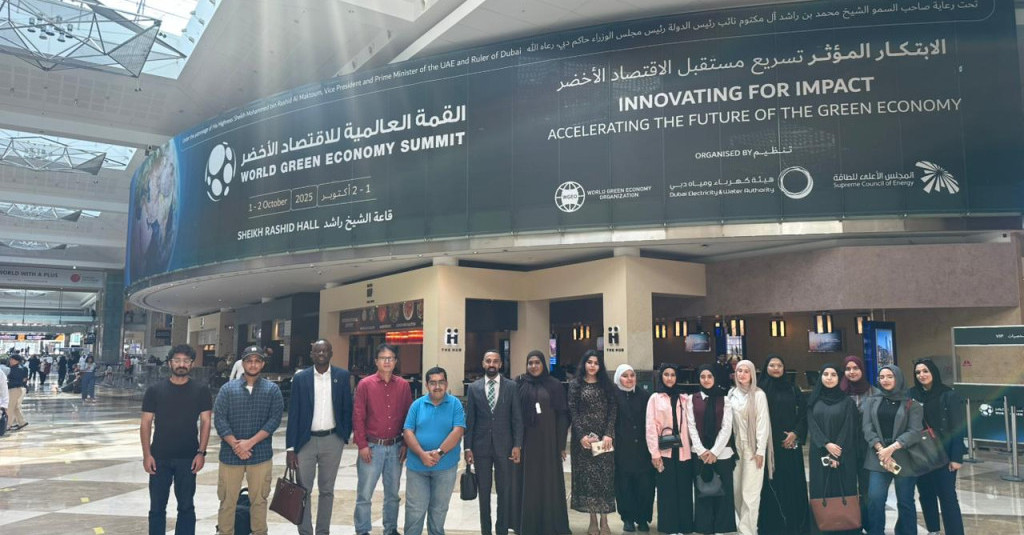
Ajman University Students Attend World Green Economy Summit 2025
A Focus on Sustainable Climate Finance and Public-Private Partnerships
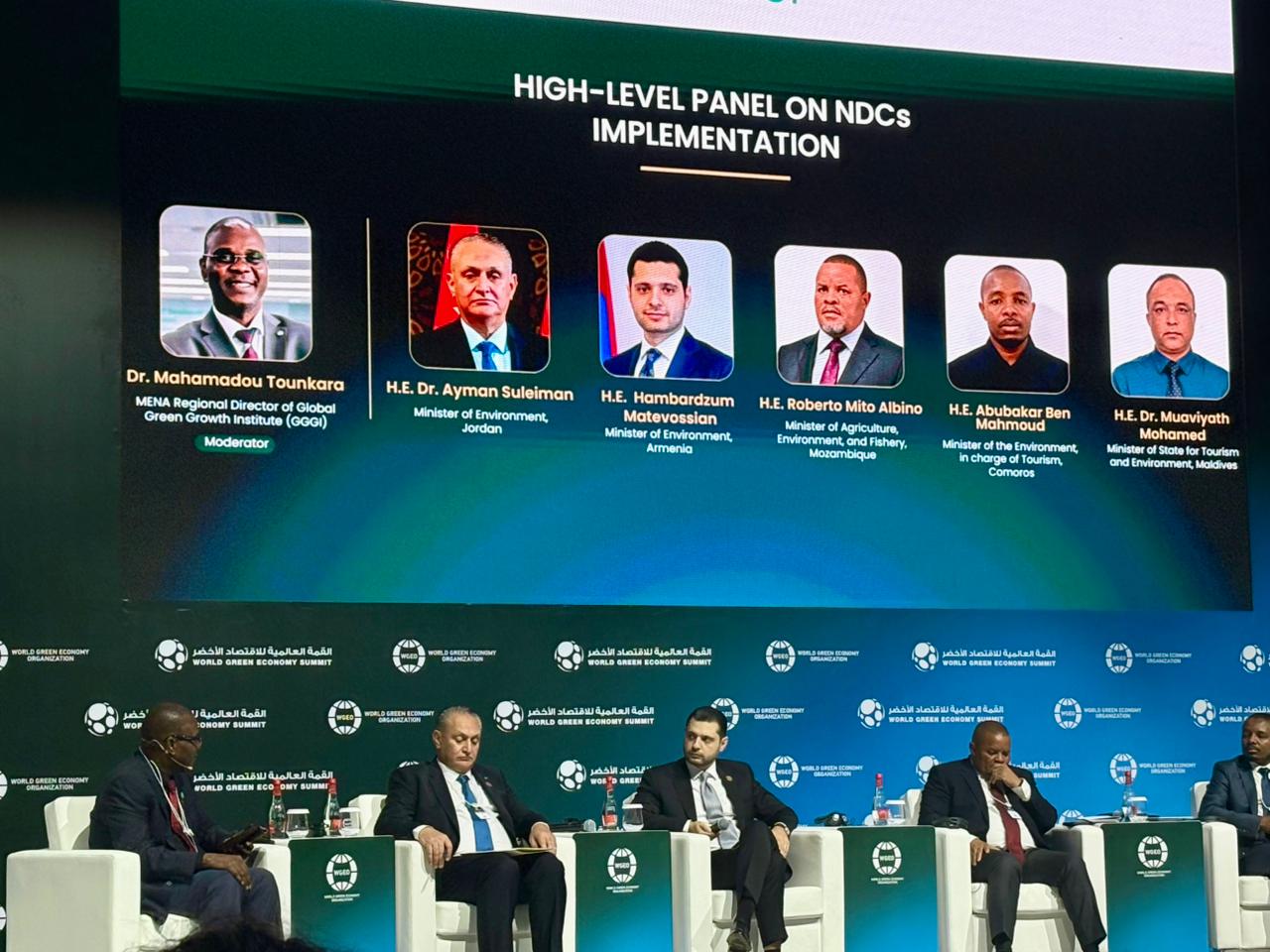
During the summit, students attended a series of panel discussions and sessions focusing on sustainable climate finance, public-private partnerships, NDCs, and regional climate initiatives across Africa and the Middle East. The event also explored strategies for developing bankable green economy projects and expanding access to climate finance.
Students learned about the critical role of green bonds, carbon pricing mechanisms (including carbon tax and emissions trading schemes (ETS)), and the emerging Carbon Border Adjustment Mechanism (CBAM) in mobilizing private sector investment for decarbonization. Discussions highlighted how climate finance can support a just transition, ensuring that developing economies receive the necessary resources to build climate resilience infrastructure without sacrificing economic growth.
Regional Climate Initiatives and Climate Diplomacy
The summit placed particular emphasis on regional climate initiatives across Africa and the Middle East, showcasing how climate diplomacy is fostering cross-border collaboration on renewable energy deployment, energy efficiency, and sustainable mobility / low‑carbon transport. Students gained insights into how countries are working together to expand renewable energy sources (solar, wind, hydro, geothermal, tidal) and invest in green hydrogen as a cornerstone of the future low‑carbon economy.
Discussions also addressed the importance of electrification of transport, heating, and industry as key pathways for reducing the carbon footprint of high-emitting sectors. Students learned about successful models of public-private partnerships that have accelerated the deployment of climate resilience infrastructure while reducing climate vulnerability in vulnerable regions.
Addressing the Climate Emergency Through Science-Based Targets
Against the backdrop of a global climate emergency, the summit addressed the urgent need for science‑based targets aligned with the remaining global carbon budget. Speakers warned of approaching climate tipping points and accelerating climate feedback loops, emphasizing that fossil fuel phase out and methane reduction (from agriculture, waste, and oil/gas sectors) must proceed without delay. Students also learned about the role of black carbon mitigation as a near‑term climate solution.
The summit explored the potential of carbon capture, utilization, and storage (CCUS) and direct air capture (DAC) as negative emissions technologies, while emphasizing that these should complement—not replace—direct emission reductions. Students heard about the importance of protecting natural carbon sinks (forests, oceans, soil) and investing in nature‑based solutions (NbS) such as afforestation, reforestation, ecosystem restoration, and blue carbon conservation (mangroves, seagrasses, salt marshes).
Climate Adaptation, Resilience, and Disaster Risk Reduction
The summit also dedicated significant attention to climate adaptation plans, disaster risk reduction (DRR), and early warning systems as essential components of climate resilient development. Students learned how climate risk and climate vulnerability assessments inform the design of climate resilience infrastructure, and how loss and damage considerations are increasingly shaping international climate negotiations.
Discussions highlighted the role of climate modelling and scenario analysis (SSPs, RCPs) in predicting future climate impacts and guiding investment decisions. Students gained exposure to the climate action tracker as a tool for monitoring national and corporate progress, and to the growing field of climate litigation as a mechanism for enforcing climate commitments.
Circular Economy, Food Systems, and Sustainable Agriculture
Beyond energy and finance, the summit explored the transformative potential of circular economy and zero waste principles in reducing emissions across supply chains. Sessions on food systems transformation addressed sustainable agriculture, agroecology, and the need to reduce methane emissions from livestock while building climate resilience in farming communities.
Students learned how electrification and green hydrogen can decarbonize industrial processes, and how sustainable mobility and low‑carbon transport solutions are reshaping urban planning across the region. The integration of nature‑based solutions into infrastructure design was highlighted as a cost‑effective strategy for enhancing climate resilience while delivering biodiversity co‑benefits.
Valuable Exposure to Global Sustainability Practices
The summit provided students with valuable exposure to global sustainability practices and emerging environmental policies, while offering opportunities to engage with experts and gain deeper insight into climate action, green investment, and sustainable development initiatives shaping the future of the region and beyond.
Students networked with policymakers, industry leaders, and academics, returning to campus with concrete ideas for capstone projects, research initiatives, and student‑led climate activism. The experience reinforced the importance of climate literacy and behavioural change as foundations for effective climate action, and highlighted the role of grassroots movements and corporate climate accountability in driving the transition to a green economy.
Looking Ahead: From Knowledge to Action
The World Green Economy Summit 2025 served as a powerful reminder that accelerating the green transition requires collective action across governments, businesses, civil society, and academia. Ajman University remains committed to translating the insights gained from such summits into concrete action, whether through curriculum enhancement, research initiatives, operational decarbonization, or community outreach.