News
Ajman University Students Showcase Sustainable Innovation at DATE and CARE MENA Event
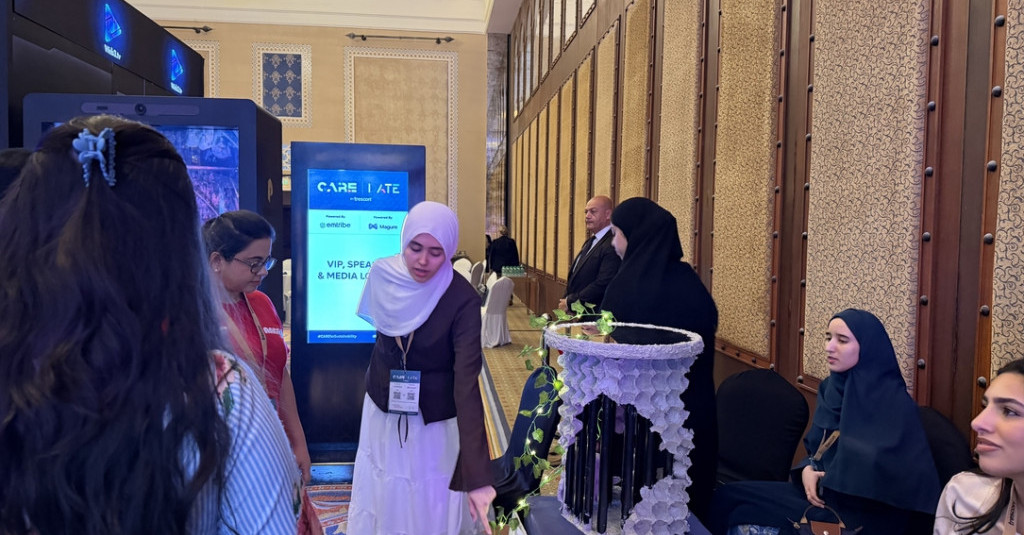
Ajman University (AU) students participated in the DATE (Digital Acceleration & Technology Expo) and CARE (Climate Action & Regenerative Environment) MENA event, organized by Trescon. Students showcased a range of innovative projects focused on sustainability, design, and emerging technologies, reinforcing the University's commitment to environmental stewardship, decarbonization, and technological advancement.
The event brought together a distinguished cross-section of industry leaders, innovators, policymakers, and young talent to explore cutting-edge advancements in sustainability and future technologies. Through this dynamic platform, Ajman University students had the opportunity to present their creative ideas and engage directly with professionals from various sectors, gaining invaluable real-world exposure and mentorship.
Sustainable Furniture and the Circular Economy
Among the showcased projects were several sustainable furniture and design concepts developed using reclaimed and environmentally friendly materials. Students presented innovative pieces that actively promoted circular economy and zero waste principles, demonstrating how waste materials can be transformed into functional, aesthetically compelling, and creative products. These projects directly address the need for climate resilience infrastructure by reducing demand for virgin materials and lowering the overall carbon footprint of the design and construction sectors.
-
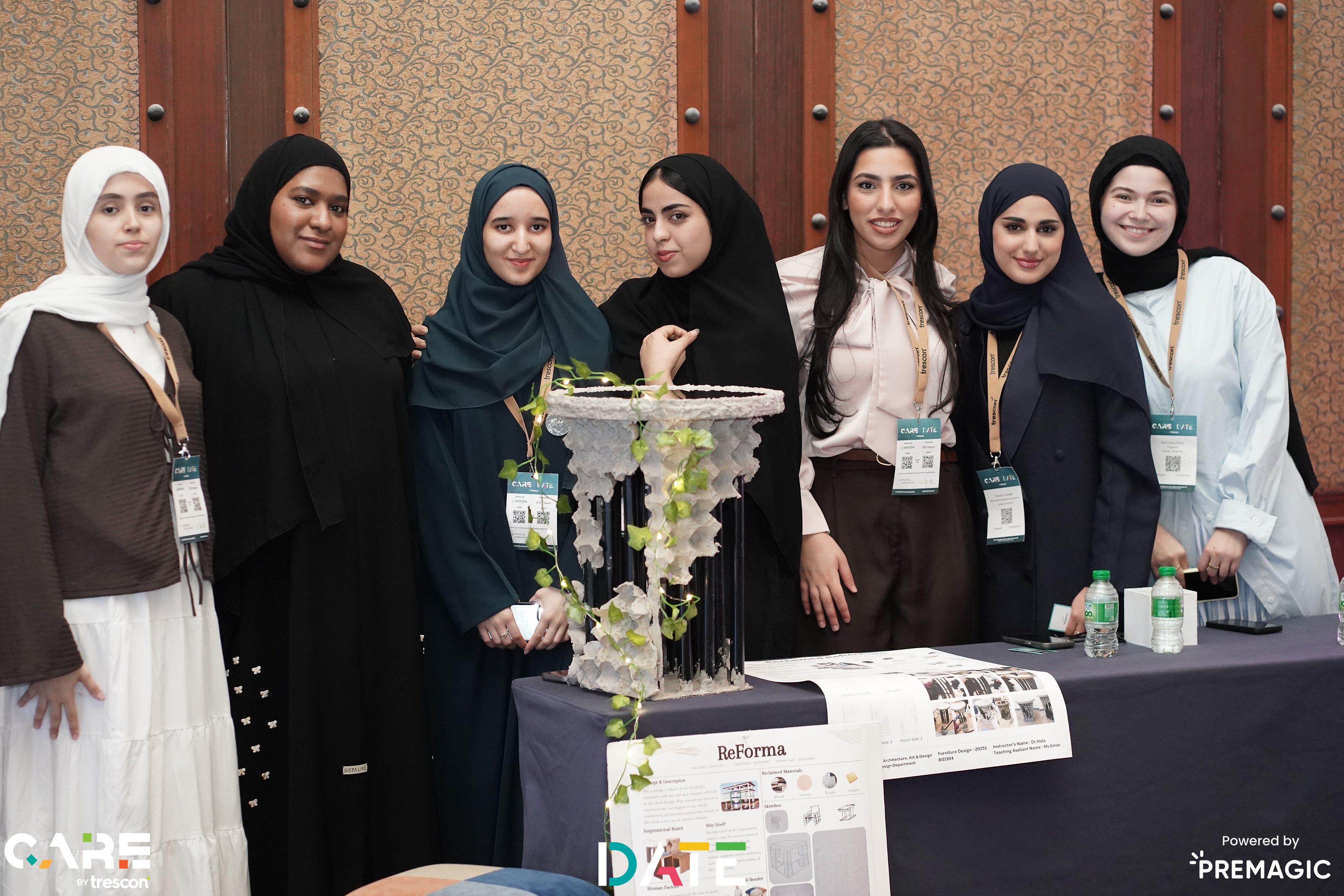
"ReForma": This featured project explored a sustainable stool design inspired by architectural structures. Created entirely using reclaimed materials, ReForma exemplifies how structural aesthetics and ecological responsibility can converge in everyday objects. The project supports climate adaptation plans by demonstrating low-impact design solutions that can be deployed across vulnerable communities.
-
"Reclaimed Reflections": Another standout project demonstrated the innovative use of reused plastic pipes, recycled cardboard, mirrors, and eco-friendly cement to create durable and stylish sustainable furniture solutions. This project highlights the potential of multi-material upcycling in reducing construction and design waste while contributing to ecosystem restoration through reduced landfill pressure and resource extraction.
Healthcare Innovation: Sleep Apnea Detection Device
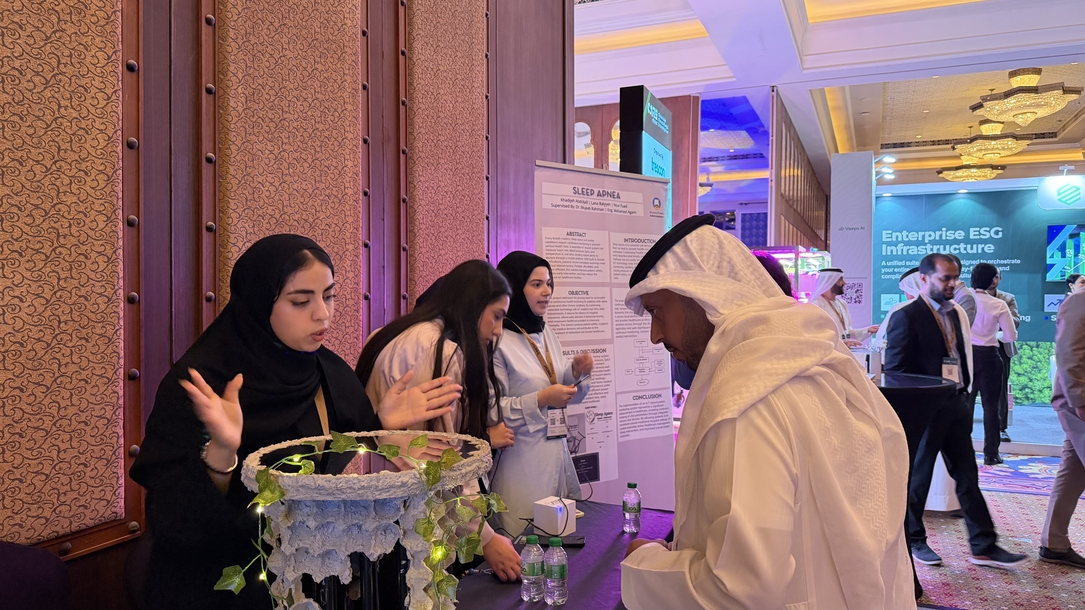
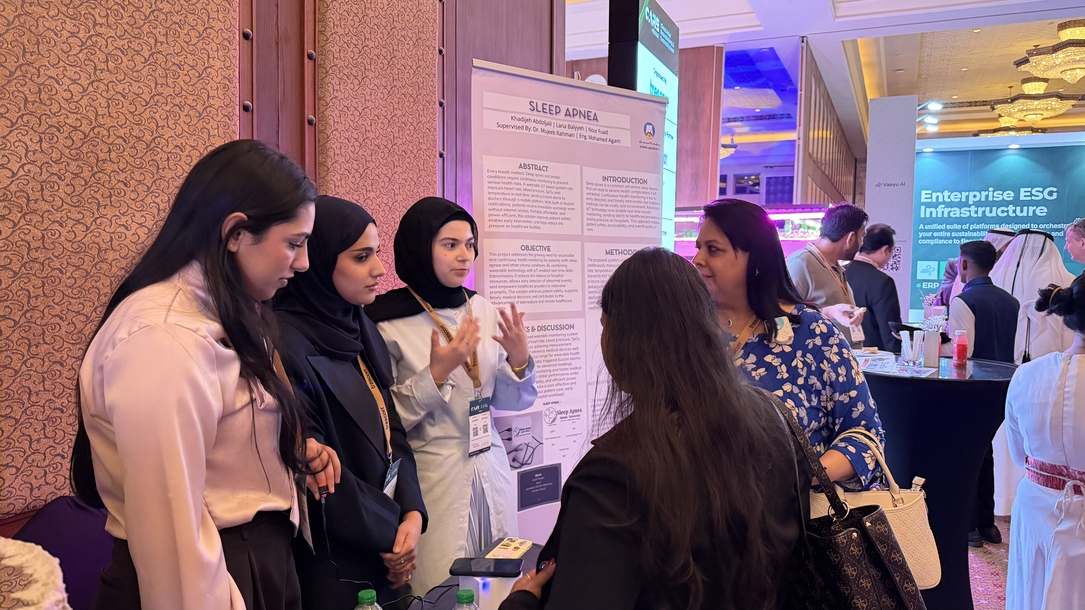
In addition to their design-focused projects, students also presented a healthcare-oriented innovation featuring a device designed to assist in the early detection of sleep apnea. This project underscored the intersection of technology, health, and social impact, illustrating how emerging technologies can be harnessed to address pressing medical challenges while improving quality of life. Such innovations contribute to climate justice by ensuring that healthcare solutions remain accessible to climate-vulnerable populations who may face increased health risks due to rising temperatures and worsening air quality.
Advancing Climate Literacy and Behavioural Change
The students' participation in the event also served as a powerful exercise in climate literacy and behavioural change. By engaging directly with industry professionals and policymakers, students demonstrated how grassroots movements and climate activism within academic settings can drive corporate climate accountability and embed environmental, social and governance (ESG) principles into product design and innovation. The event provided a platform for young innovators to advocate for science based targets and long term low emission development strategies (LT-LEDS) aligned with the UAE's Net Zero by 2050 ambition.
A Platform for Global Green Transition and Climate Finance
The CARE event serves as a global platform dedicated to sustainable innovation and the worldwide green transition, while DATE with Tech focuses on emerging technologies shaping the future across industries including artificial intelligence, sustainability, healthcare, and smart infrastructure. Together, these parallel tracks provided Ajman University students with a comprehensive stage to demonstrate their technical skills, creative thinking, and commitment to solving real-world problems.
Discussions at the event also touched upon the role of climate finance mechanisms, including green bonds and carbon pricing (such as emissions trading schemes or a carbon tax), in scaling up student-led innovations. Participants explored how carbon offsetting and carbon removal technologies (including direct air capture (DAC) and nature-based solutions (NbS)) could complement deep emissions reductions, while acknowledging that carbon offsets remain a "last resort" behind direct action. The potential role of green hydrogen, electrification of transport and heating, and sustainable mobility / low carbon transport in future iterations of student projects was also highlighted.
Building Climate Resilience and a Just Transition
The projects showcased by Ajman University students align with broader efforts to build climate resilience, reduce climate vulnerability, and support a just transition that leaves no community behind. By integrating principles of sustainable agriculture, agroecology, and food systems transformation into their design thinking, students demonstrated awareness of the interconnectedness of environmental and social systems. Their work also implicitly addresses the need for disaster risk reduction (DRR) and early warning systems by promoting material efficiency and waste reduction as forms of climate risk mitigation.
Commitment to Innovation and Experiential Learning
Ajman University's participation in the DATE and CARE MENA event reflects its deep-rooted commitment to fostering innovation, sustainability, and experiential learning. By empowering students to develop impactful solutions that address real-world environmental and societal challenges, the University continues to position its graduates as future-ready leaders capable of contributing meaningfully to the UAE's green economy, fossil fuel phase out, and net-zero emissions ambitions. The University also recognizes the importance of climate mainstreaming across all disciplines, ensuring that climate adaptation and mitigation are embedded in curricula and co-curricular activities alike.
As the world confronts climate tipping points, climate feedback loops, and the escalating climate emergency, Ajman University remains steadfast in its mission to prepare students not only to understand these challenges but to act upon them. Through initiatives like the UCN Decarbonization Academy and participation in global platforms thet helps cultivating a generation of innovators equipped to drive climate resilient development and track progress using tools like the climate action tracker.