Student Project Spotlight: “ECaust” A Low-Cost Retrofit Solution for Cleaner Last-Mile Delivery in the UAE
Student Project Spotlight: “ECaust” A Low-Cost Retrofit Solution for Cleaner Last-Mile Delivery in the UAE
As e-commerce continues to surge across the UAE, the environmental cost of last-mile delivery is mounting. Transport already accounts for 19–22% of the nation’s carbon emissions, and last-mile logistics alone contributes over half of all logistics emissions. With urban populations exceeding 85% and delivery demand growing by 15–20% annually, the need for immediate, scalable solutions has never been clearer.
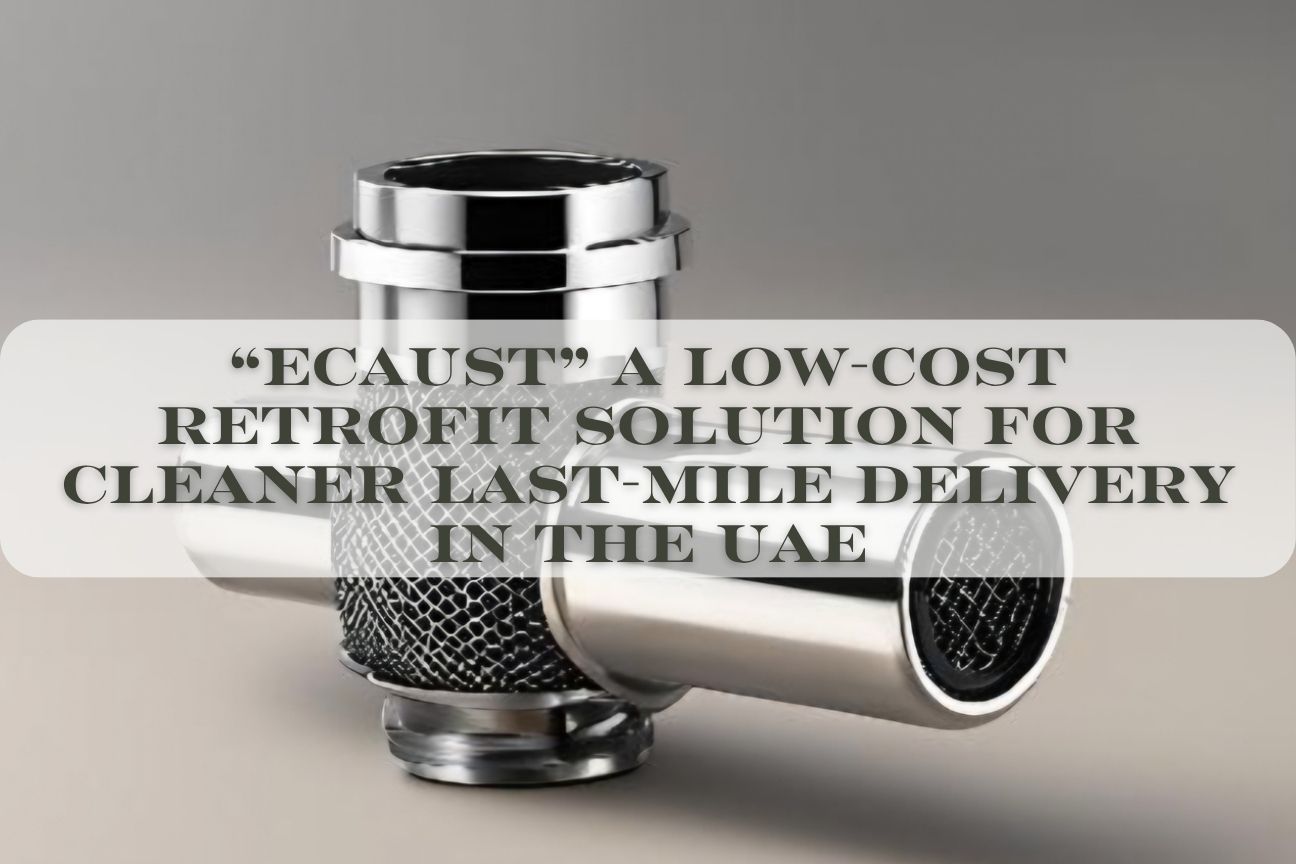
Enter ECaust, a student-developed retrofit emission system designed to curb pollution from existing diesel delivery fleets. Unlike costly electric vehicle transitions that require new infrastructure and years of planning, ECaust is a plug-and-play exhaust device that can be installed on any diesel van, truck, or motorcycle in under 30 minutes. Using a mesh-based catalytic filter, it breaks down harmful gases and reduces NOx and PM2.5 emissions by up to 85%. The technology is compatible with 100% of current fleets, requires no engine modifications, and demands maintenance only every 50,000 km.
The economic case is equally compelling. At just AED 750 per unit roughly 15% the cost of replacing a vehicle with an EV-ECaust delivers 10–15% fuel savings, helping fleets recover their investment within 6–9 months. It also shields companies from environmental fines of AED 1,000 or more per vehicle and strengthens their ESG performance. With over 150,000 commercial delivery vehicles operating in the UAE, the market potential is substantial, and the solution aligns directly with the UAE National Air Quality Strategy 2031 and Net Zero 2050 goals.
Supporting SDG 13: Climate Action
This project directly supports Sustainable Development Goal 13 by reducing greenhouse gas emissions and air pollutants from the transport sector—one of the largest contributors to urban carbon footprints. By retrofitting existing diesel fleets instead of waiting for full electrification, ECaust offers an immediate, low-cost pathway to cleaner air and lower emissions. It also aligns with SDG 3 (Good Health and Well-Being) through improved air quality, SDG 9 (Industry, Innovation, and Infrastructure) by advancing clean technology, and SDG 12 (Responsible Consumption and Production) by extending the life of existing vehicles. The project demonstrates how student innovation can deliver practical, scalable climate solutions for the UAE’s growing cities.
Keywords: ECaust, last-mile delivery, retrofit emission system, SDG 13, Climate Action, air pollution, NOx reduction, PM2.5, diesel fleets, UAE Net Zero 2050, sustainable logistics, clean technology, student innovation, Ajman University.
To view the project, click here.