“MADAR” Transforming Bus Shelters into Sustainable Urban Hubs
Student Project Spotlight: “MADAR” Transforming Bus Shelters into Sustainable Urban Hubs
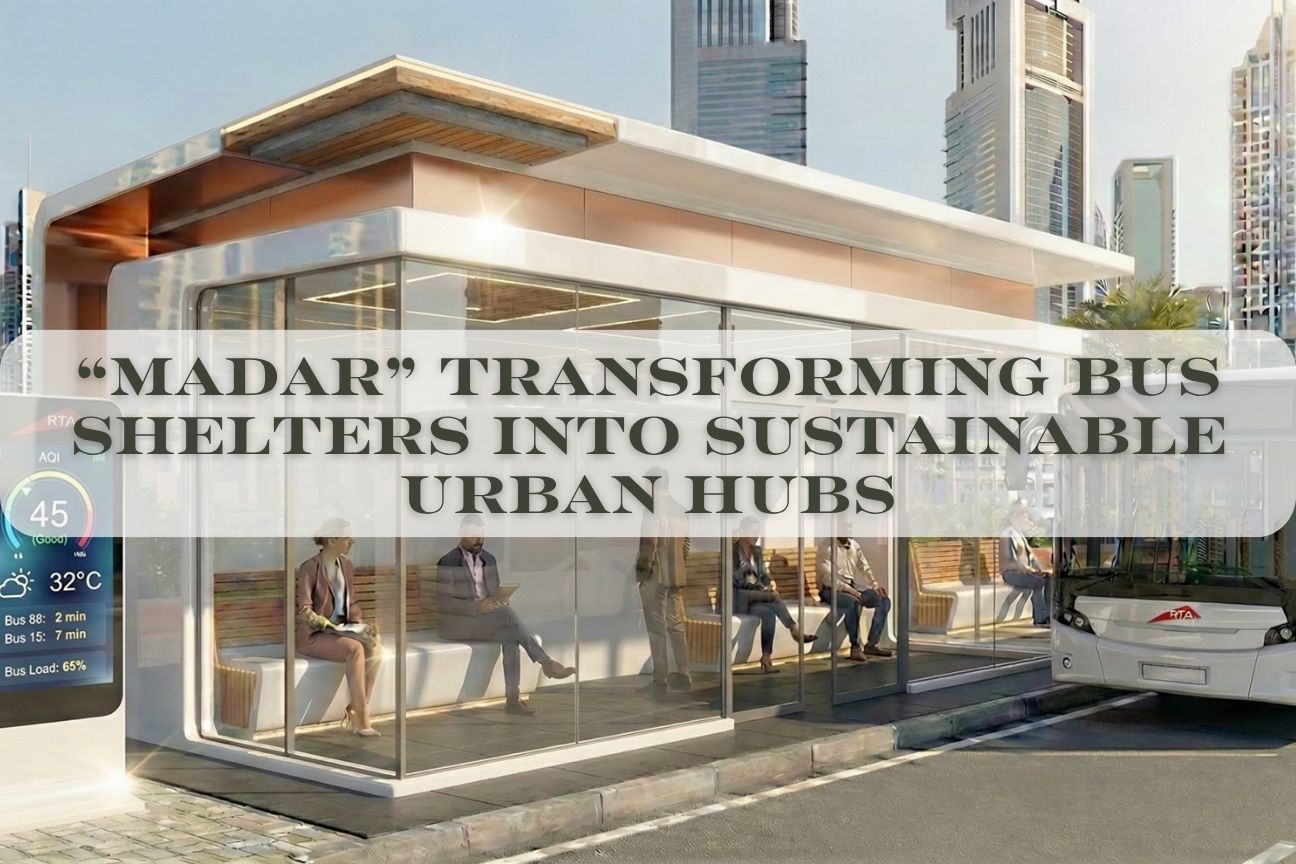
A new student project developed at Ajman University is reimagining urban transit infrastructure. Titled “MADAR,” the project is described as a smart transit node that transforms conventional bus shelters into active, sustainable urban hubs. At its core is a multi-layered design that integrates renewable energy generation, carbon-sequestering materials, and AI-driven smart systems to enhance commuter comfort while actively combating the urban heat island effect.
The project, developed by student Afaf Zeiab Alnajm, reflects a growing trend in sustainable architecture: using advanced materials and smart technology to turn passive structures into active contributors to climate mitigation. By integrating radiative cooling films, phase-change materials (PCM), and piezoelectric flooring, “MADAR” cools its immediate environment while generating its own clean energy. The station also features IoT sensors and LiDAR to monitor air quality and occupancy, transmitting real-time data to transport authorities like the RTA to optimize bus dispatching and improve the commuter experience. The structure itself actively purifies the air using photocatalytic coatings and carbon-sequestering concrete, effectively turning the shelter into a small-scale urban air purifier.
Supporting SDG 13: Climate Action
This project directly supports Sustainable Development Goal 13 by addressing the urban heat island effect and reducing carbon emissions in the built environment. By cooling the air through passive radiative technologies and sequestering CO₂ through photocatalytic coatings and carbon-infused concrete, “MADAR” helps lower ambient temperatures and improve air quality in cities. It also aligns with SDG 11 (Sustainable Cities and Communities) and SDG 7 (Affordable and Clean Energy). By transforming static infrastructure into a dynamic, life-supporting system, the project demonstrates how creative student work can contribute to the UAE’s Net Zero commitments while enhancing the quality of urban life.
Keywords: MADAR, smart transit node, urban heat island, radiative cooling, piezoelectric energy, SDG 13, Climate Action, sustainable design, smart cities, carbon sequestration, Ajman University, student innovation
To view the project, click here.