News
Ajman University Joins Global Dialogue on Sustainability Education at ISCN CoP Launch Session
Ajman University has reinforced its commitment to advancing sustainability education on the global stage by participating in the launch session of the International Sustainable Campus Network (ISCN) Sustainability Education Community of Practice (CoP), held on October 1, 2025.
The session brought together sustainability leaders from universities worldwide to discuss innovative approaches to embedding sustainability competencies across higher education. The ISCN Sustainability Education Working Group hosted the event, which focused on shaping the future of sustainability education and planning for the upcoming COP in Cape Town.
Setting the Stage: Recap from the May 2025 Roundtable
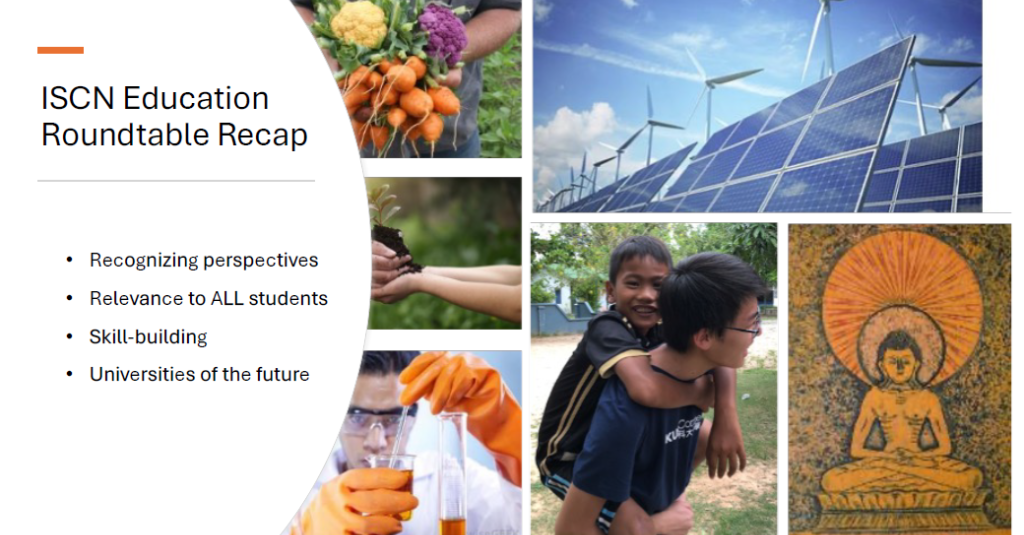
The session opened with a recap of the ISCN Education Roundtable held in May 2025, which established key themes that continue to guide the Community of Practice. Four central priorities emerged from that discussion:
-
Recognizing diverse perspectives in sustainability education
-
Ensuring relevance to ALL students regardless of discipline
-
Skill-building as a core component of sustainability curricula
-
Envisioning universities of the future and their role in society
These themes provided a foundation for the October session's deeper discussions, reflecting a shared recognition that sustainability education must extend beyond environmental science programs to reach learners across every field of study.
Understanding Today's Students: A Framework for Engagement
A significant portion of the session was devoted to understanding how universities can make sustainability relevant to diverse student populations. Participants explored a categorization framework that identified four distinct student profiles based on their career trajectories and sustainability knowledge needs:
Flexitarians — students pursuing traditional careers who benefit from adding broad-based sustainability knowledge, enhancing their adaptability and value across multiple sectors.
Generalists — students pursuing sustainability-focused careers who engage in cross-disciplinary training, allowing them to contribute value on multiple levels.
Authorities — students in traditional career tracks who develop specific sustainability-related skills, achieving high levels of expertise that add value in targeted areas.
Specialists — students pursuing specialized tracks within sustainability fields who receive focused disciplinary training, contributing deep expertise in specific domains.
This framework sparked discussion on practical strategies for integrating sustainability content into fields such as Artificial Intelligence and Technology, Pharmacology and Health Sciences, and Behavioral Neuroscience — disciplines not traditionally associated with environmental education but increasingly recognizing sustainability as integral to their future practice.
Core Competencies for Sustainability Education
The session emphasized that effective sustainability education combines content knowledge with skill-building. Participants explored a competency framework centered on five interconnected capabilities:
-
Systems Thinking — understanding the interconnections between environmental, social, and economic systems
-
Futures Thinking — anticipating and preparing for long-term sustainability challenges
-
Values Thinking — examining ethical dimensions of sustainability decisions
-
Strategic Thinking — developing practical approaches to complex sustainability problems
-
Action-Oriented Problem Solving — translating knowledge into tangible impact
These competencies are designed to equip students not merely with information about sustainability, but with the capacity to act as agents of change in their professional and personal lives.
Addressing Institutional Barriers
A key discussion segment focused on the institutional barriers that can impede the integration of sustainability education across university curricula. Participants identified common challenges including disciplinary silos, competing accreditation requirements, faculty capacity gaps, and the need for stronger institutional commitment. The conversation highlighted the importance of cross-departmental collaboration and leadership support in overcoming these obstacles.
Ajman University's Role and Contributions
Ajman University's participation in the ISCN Sustainability Education CoP reflects its broader institutional commitment to sustainability leadership. The university has embedded sustainability across its academic programs, campus operations, and community engagement initiatives, earning recognition among the world's top 300 universities in the Times Higher Education Sustainability Impact Rankings 2026, including a #1 ranking in the UAE for SDG 13 (Climate Action) and SDG 17 (Partnerships for the Goals).
Through active engagement in international sustainability networks, Ajman University contributes its experience in areas such as community-based environmental projects, campus carbon management, and student-led sustainability initiatives. The university's Office of Sustainability continues to drive forward its mission of integrating sustainability into every facet of university life.