News
Ajman University Represented at launch of the “Blooming Futures: Supporting the UAE’s Journey Toward a Wellbeing Economy” report
Ajman University Represented at launch of the “Blooming Futures: Supporting the UAE’s Journey Toward a Wellbeing Economy” report
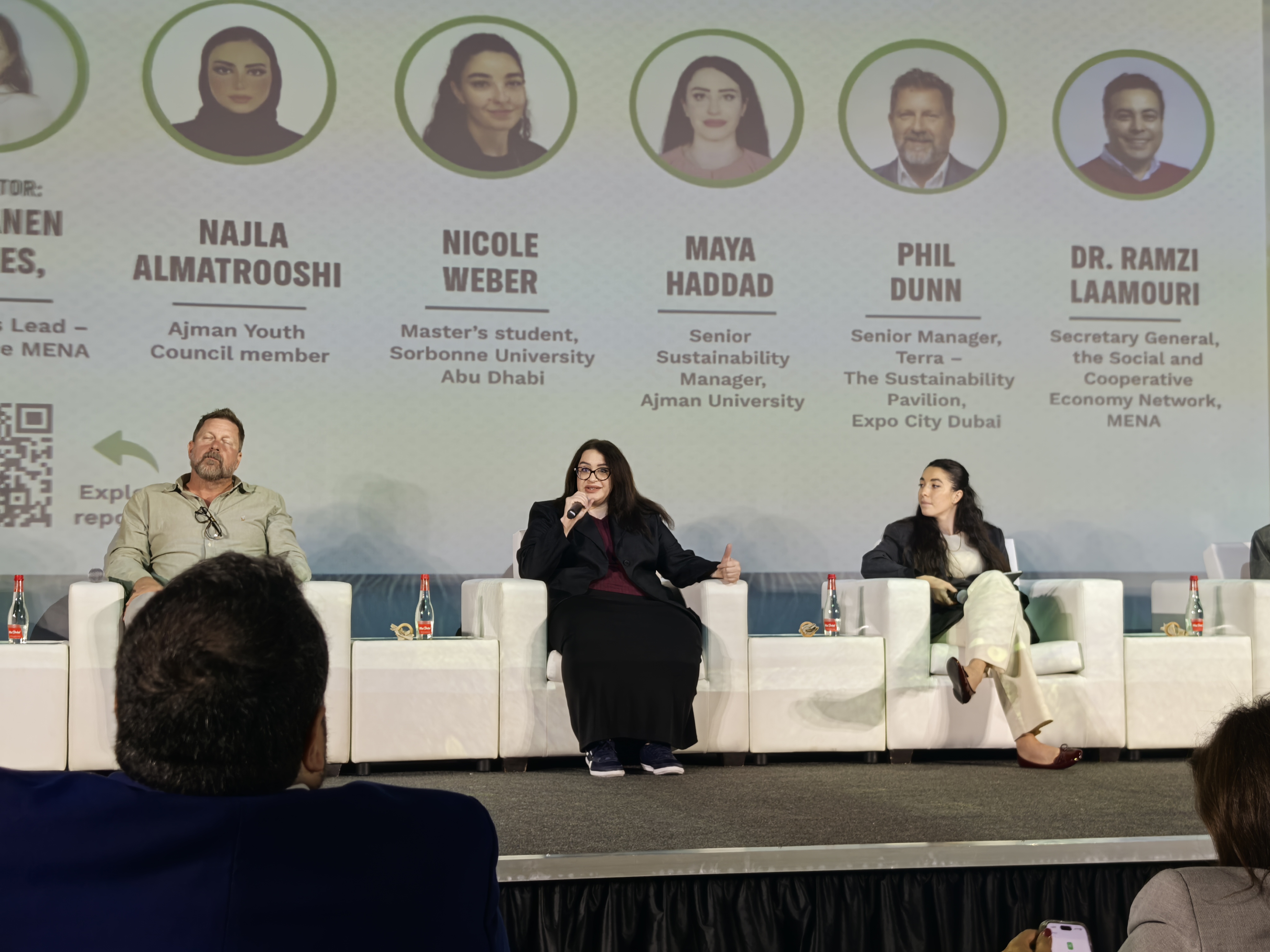
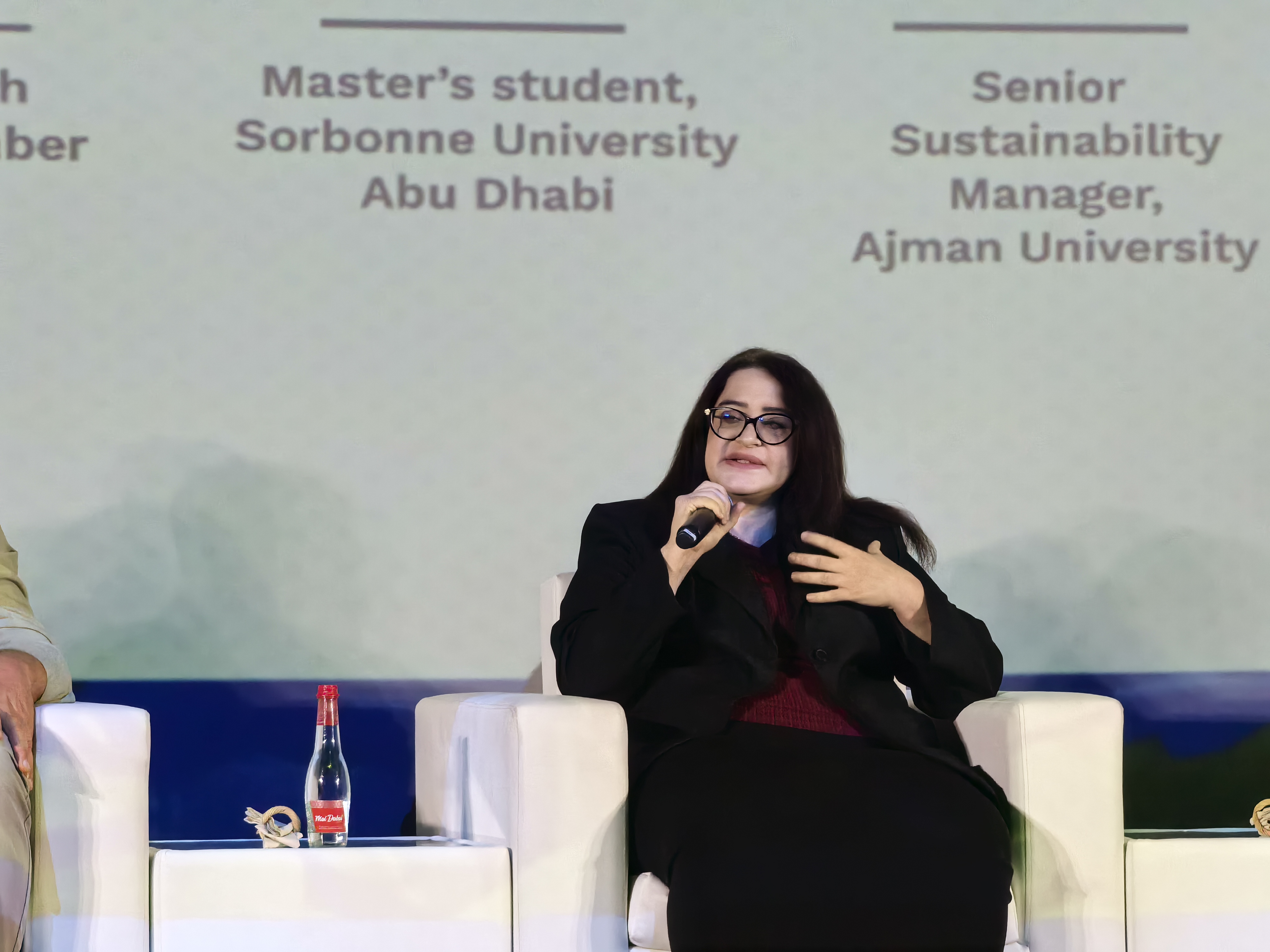
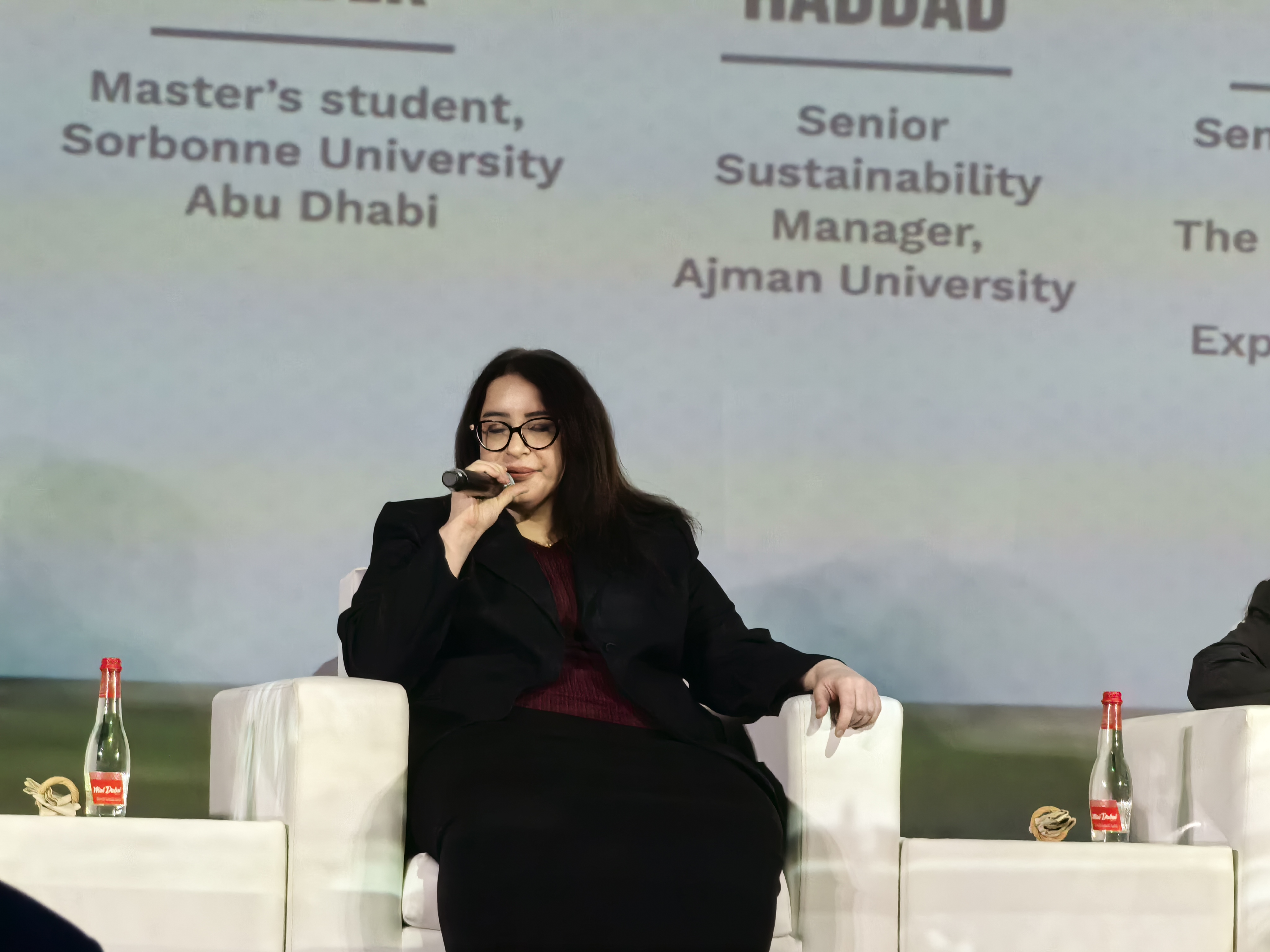
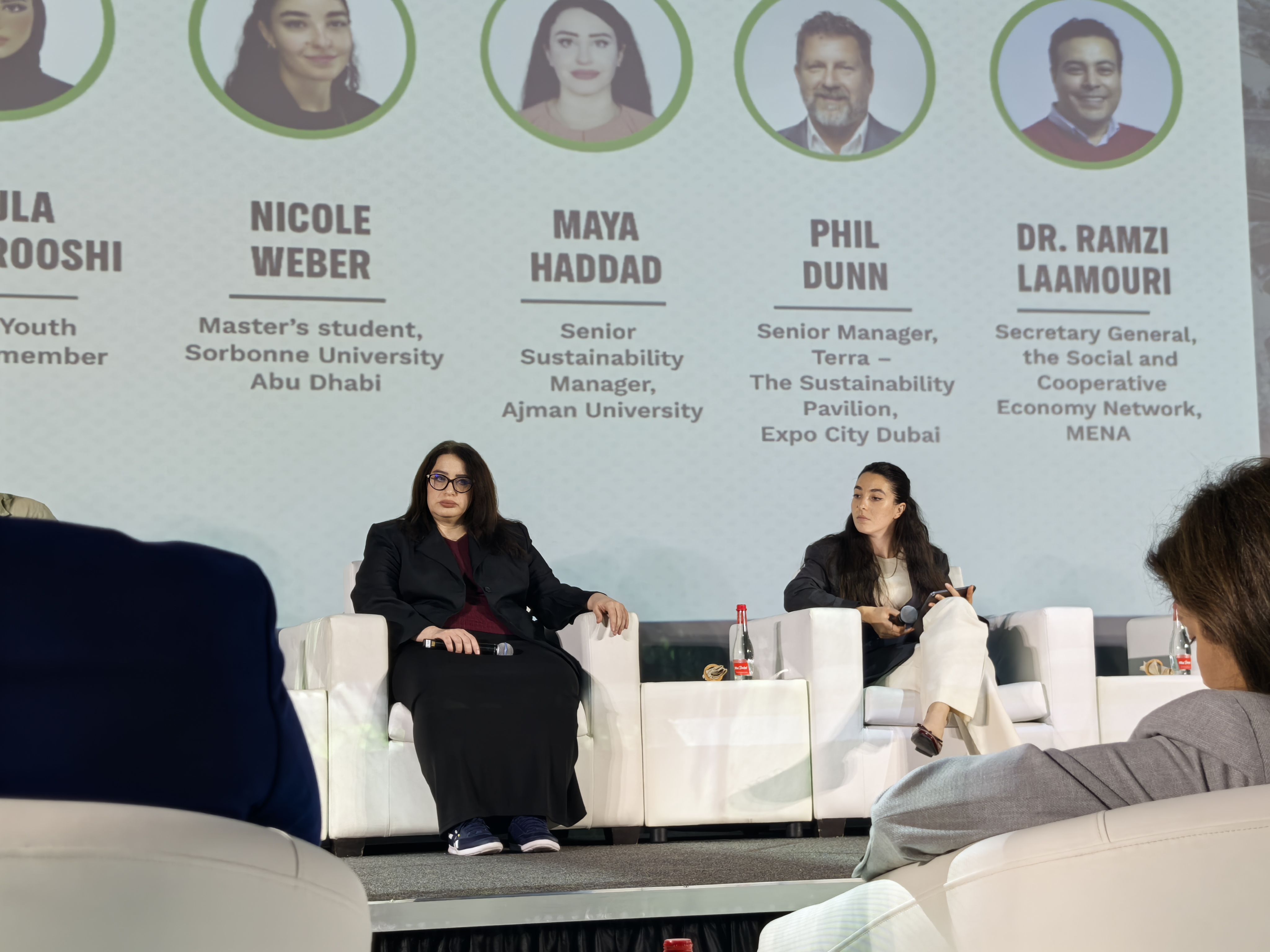
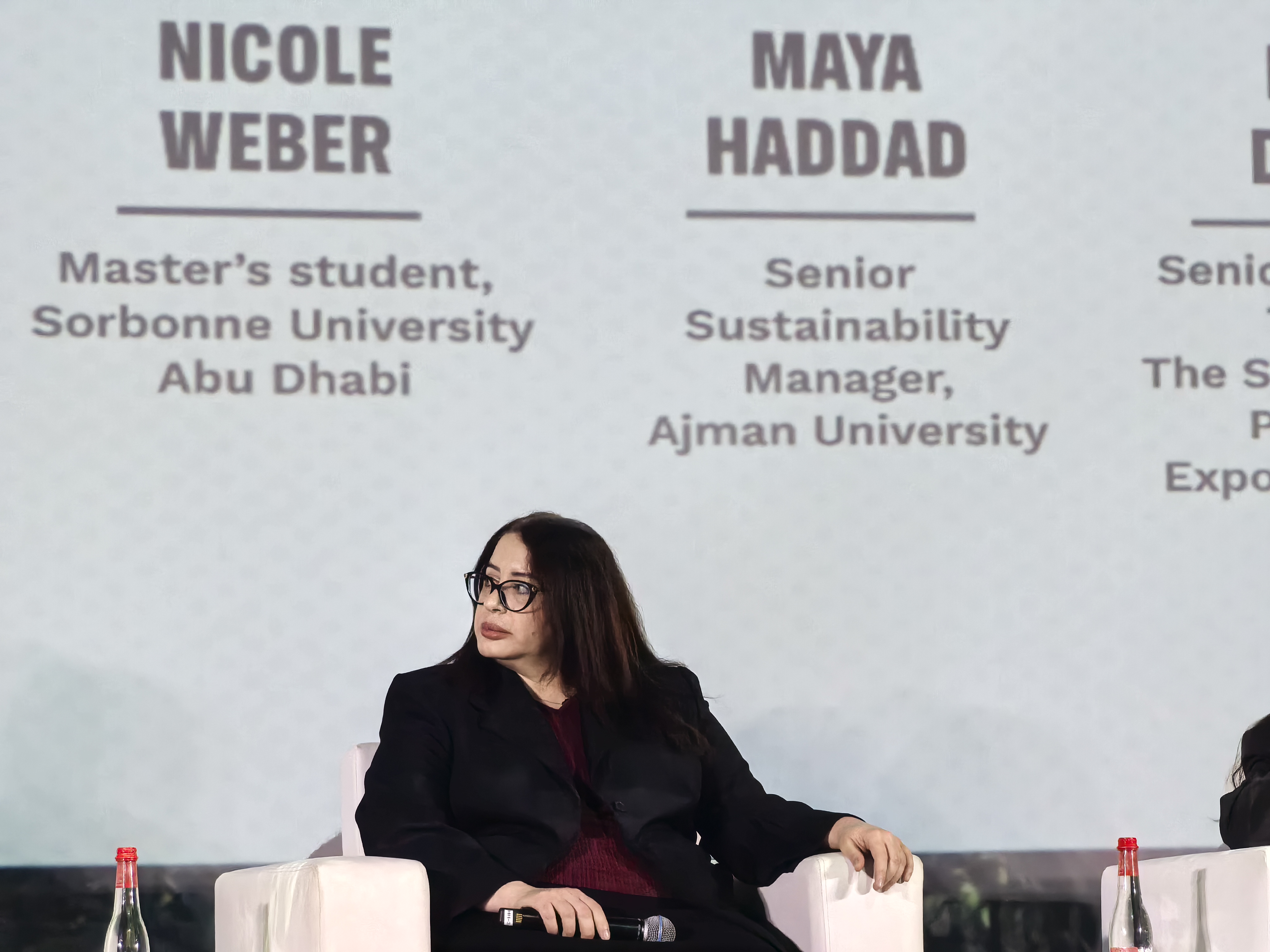
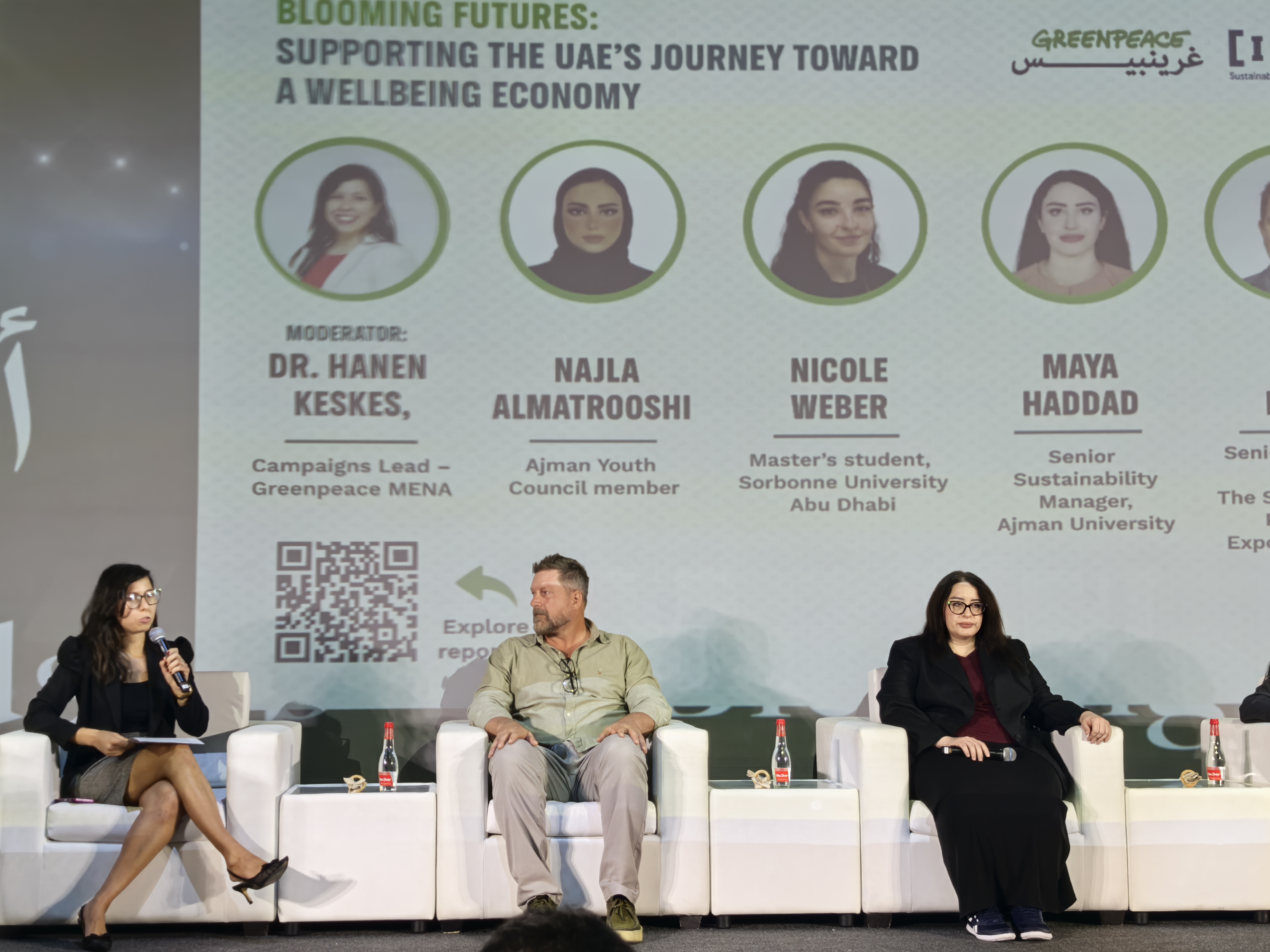
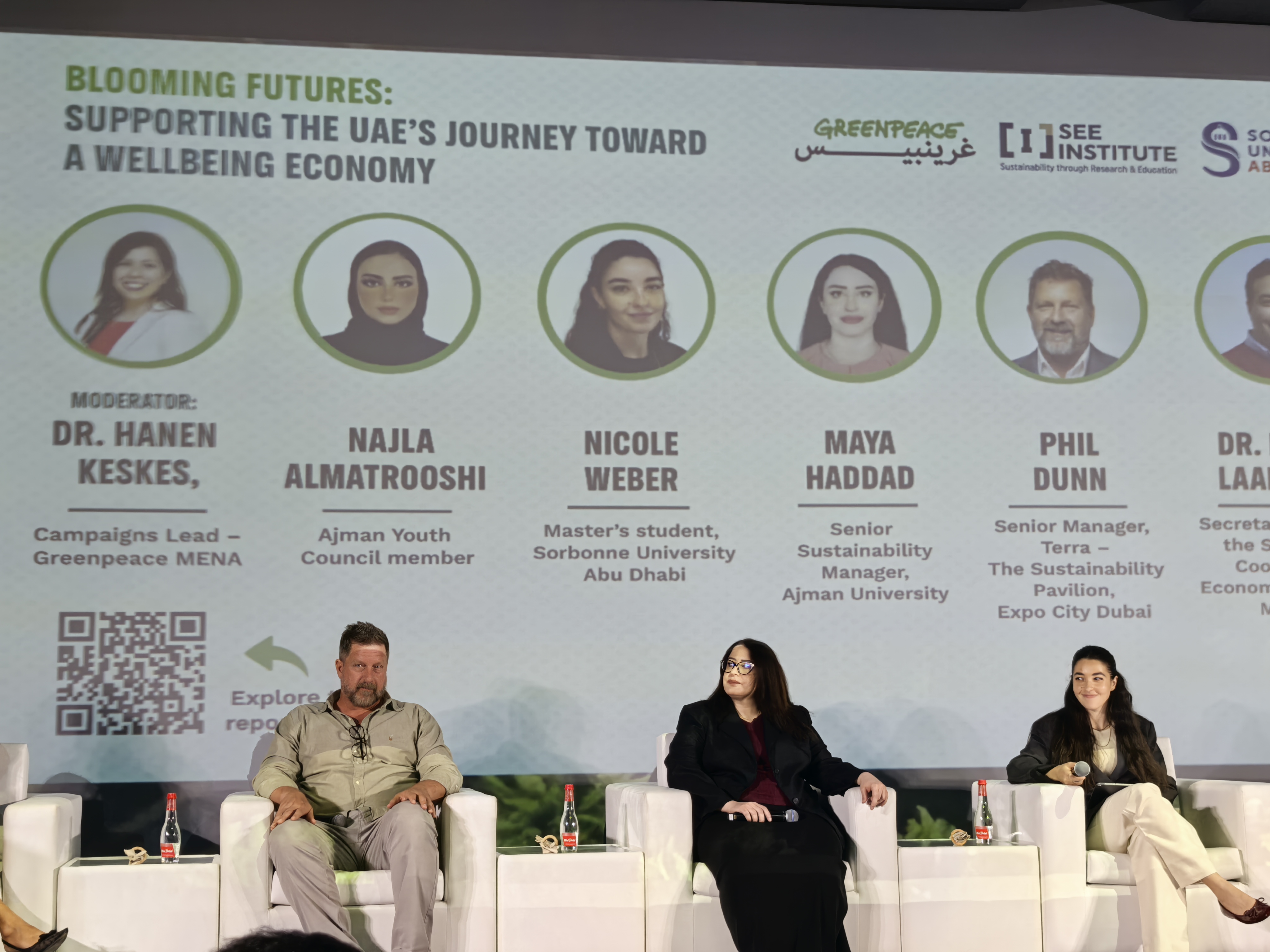
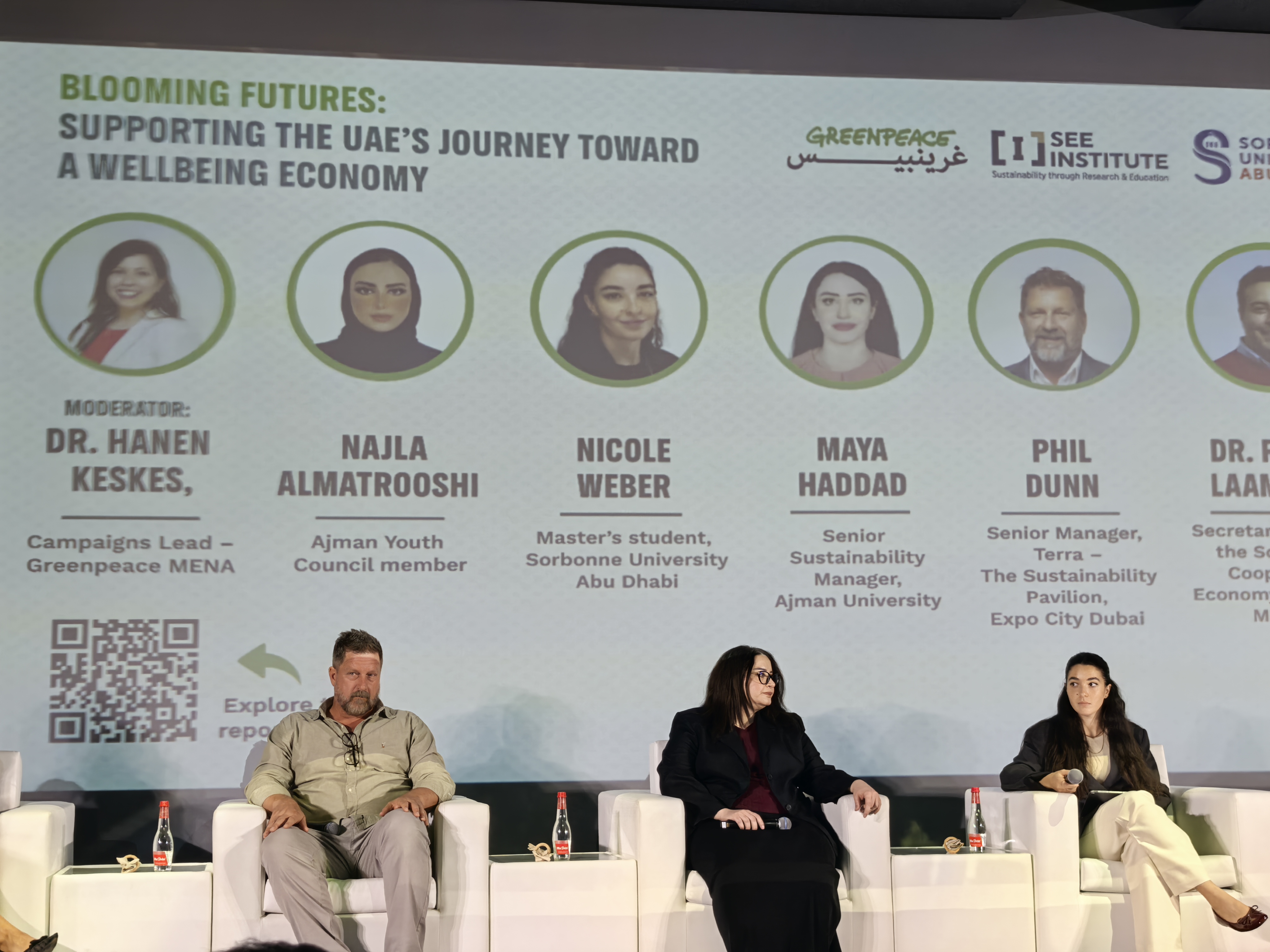
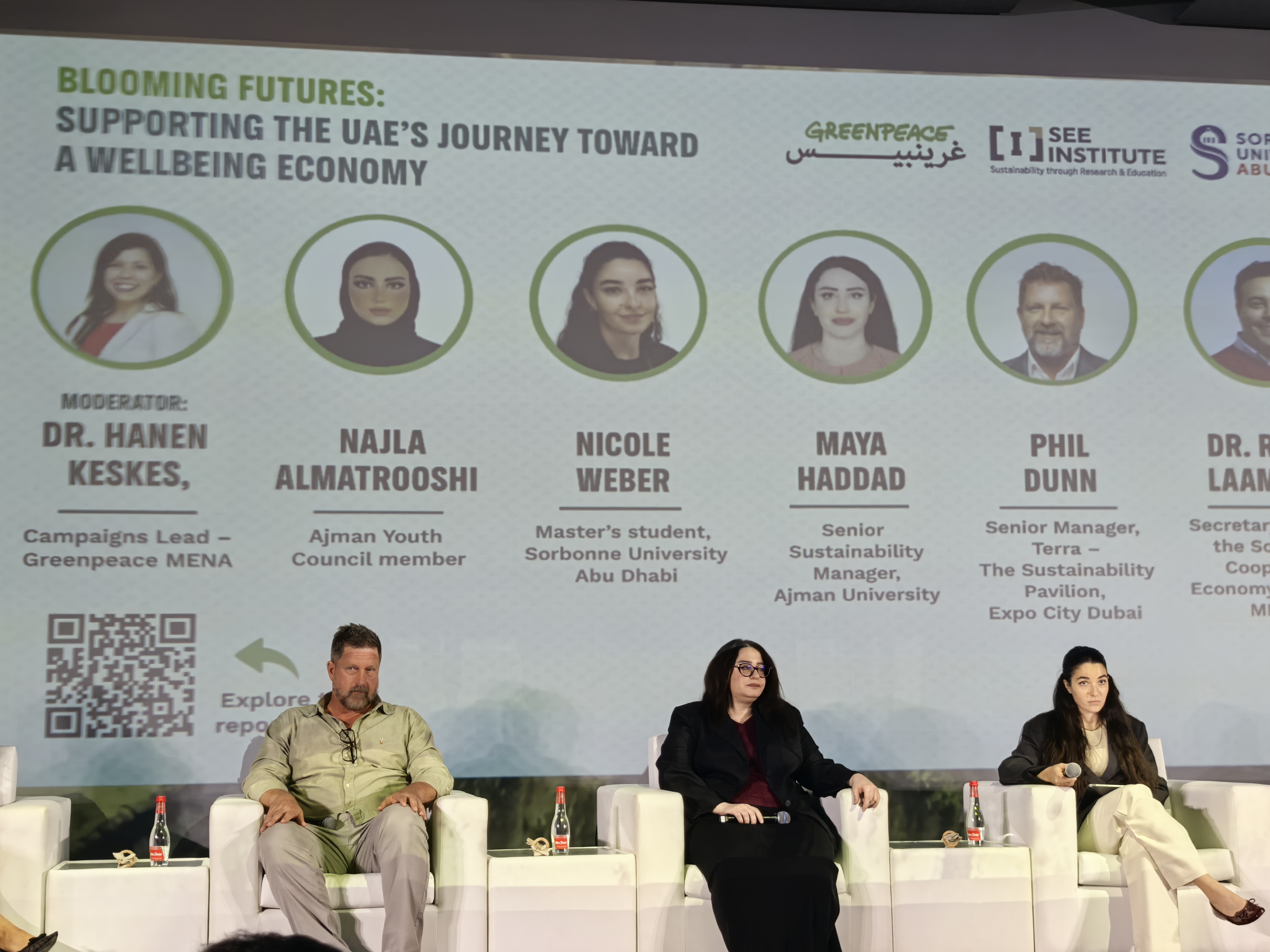
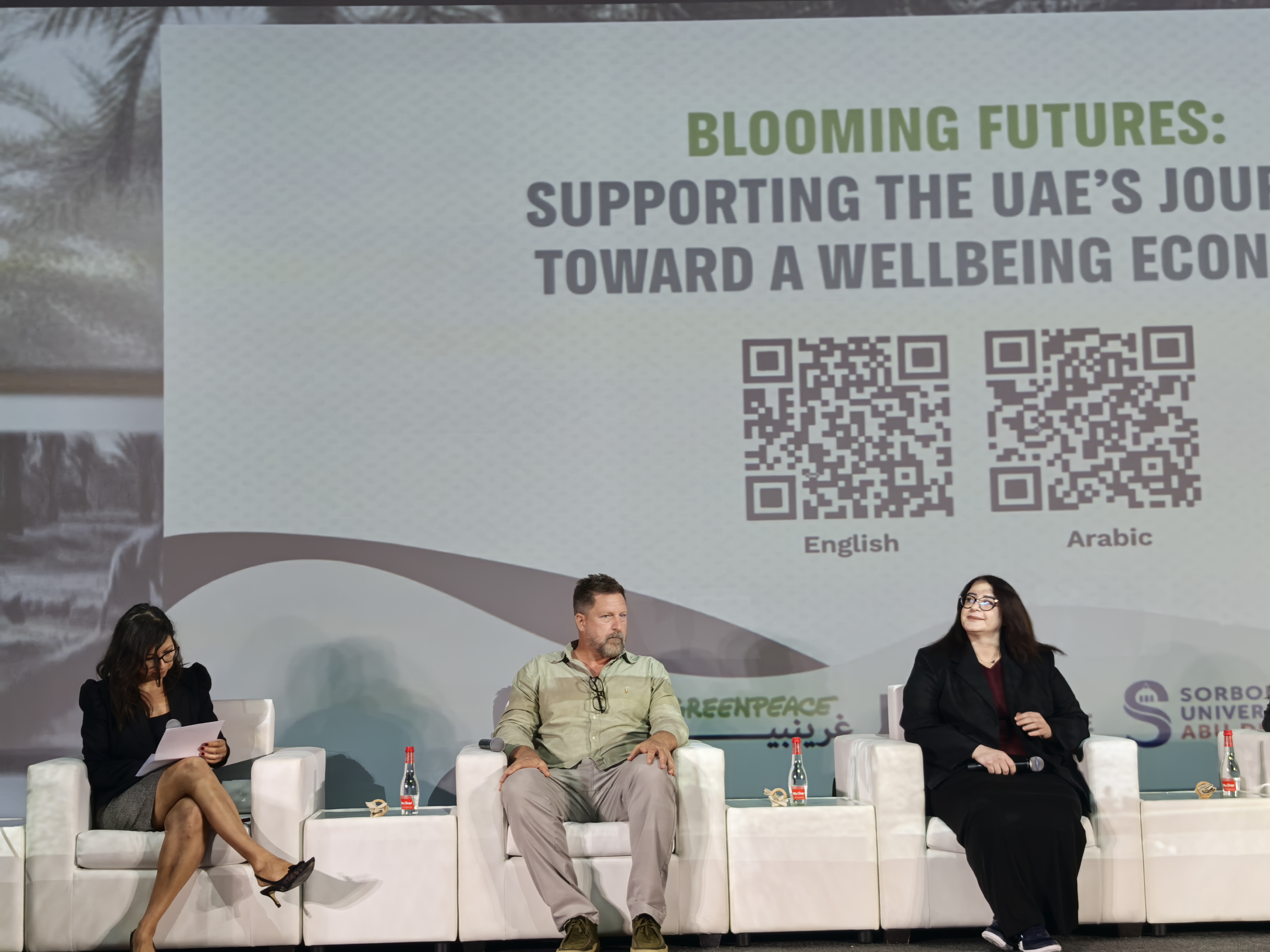
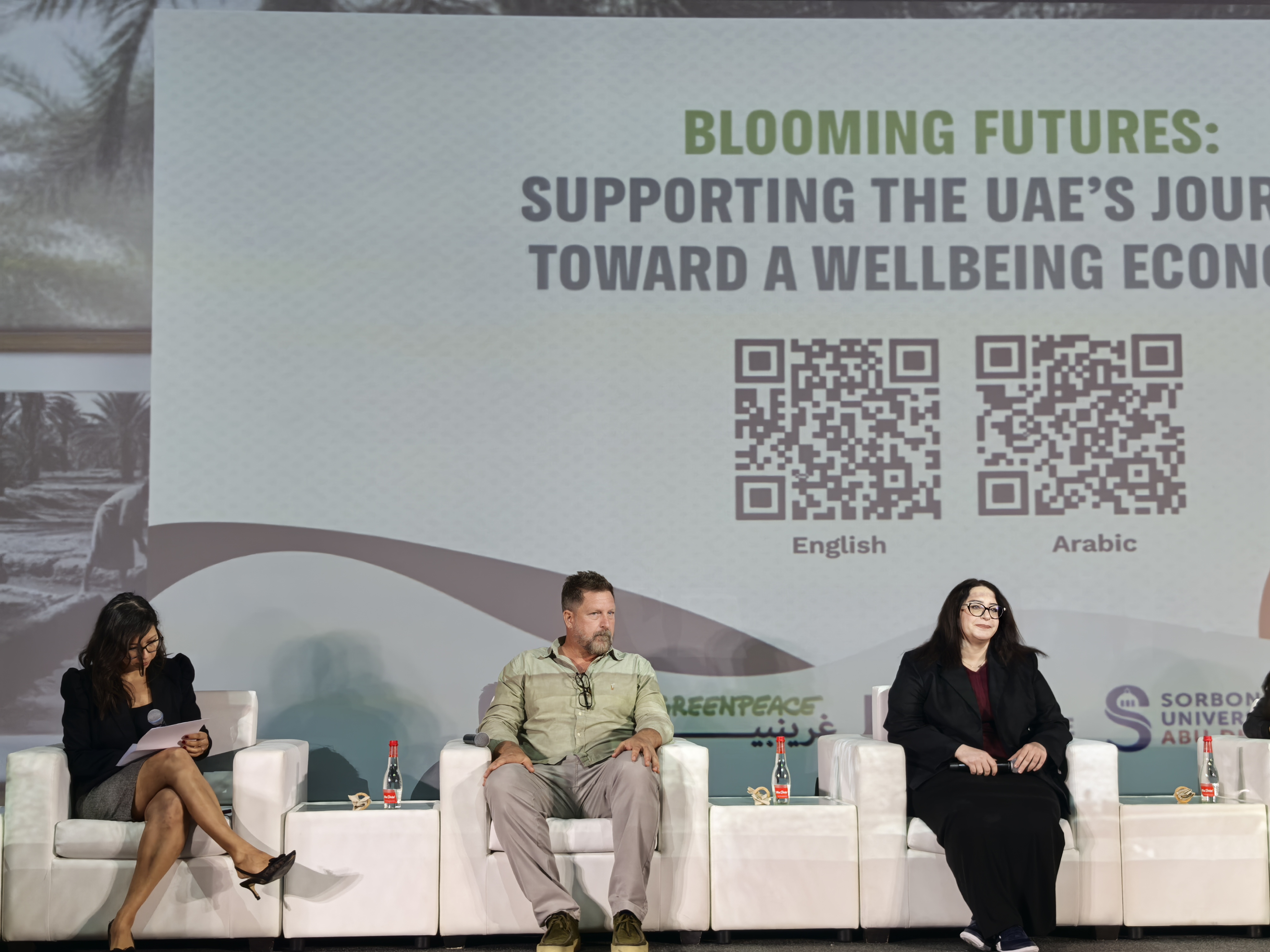
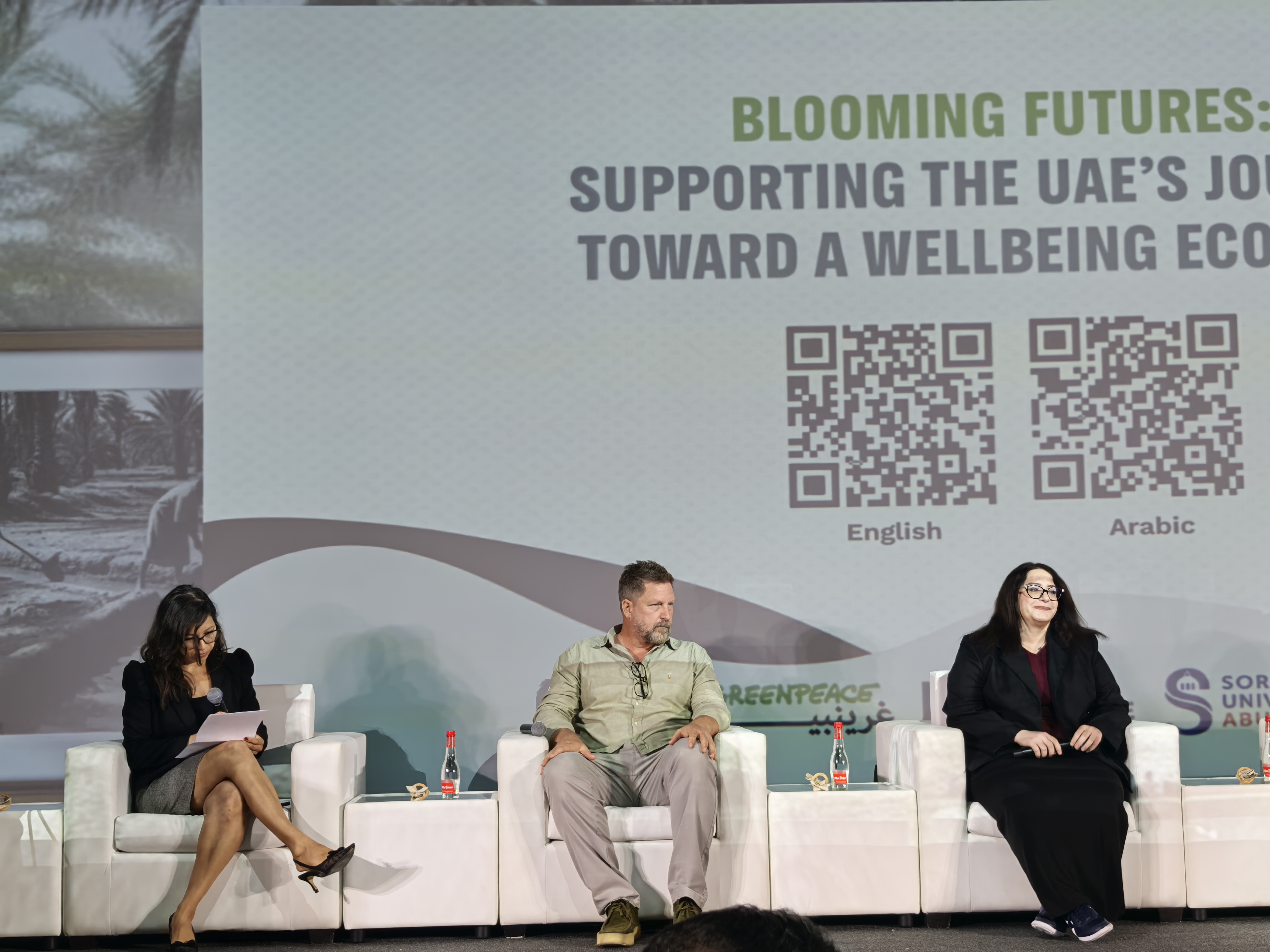
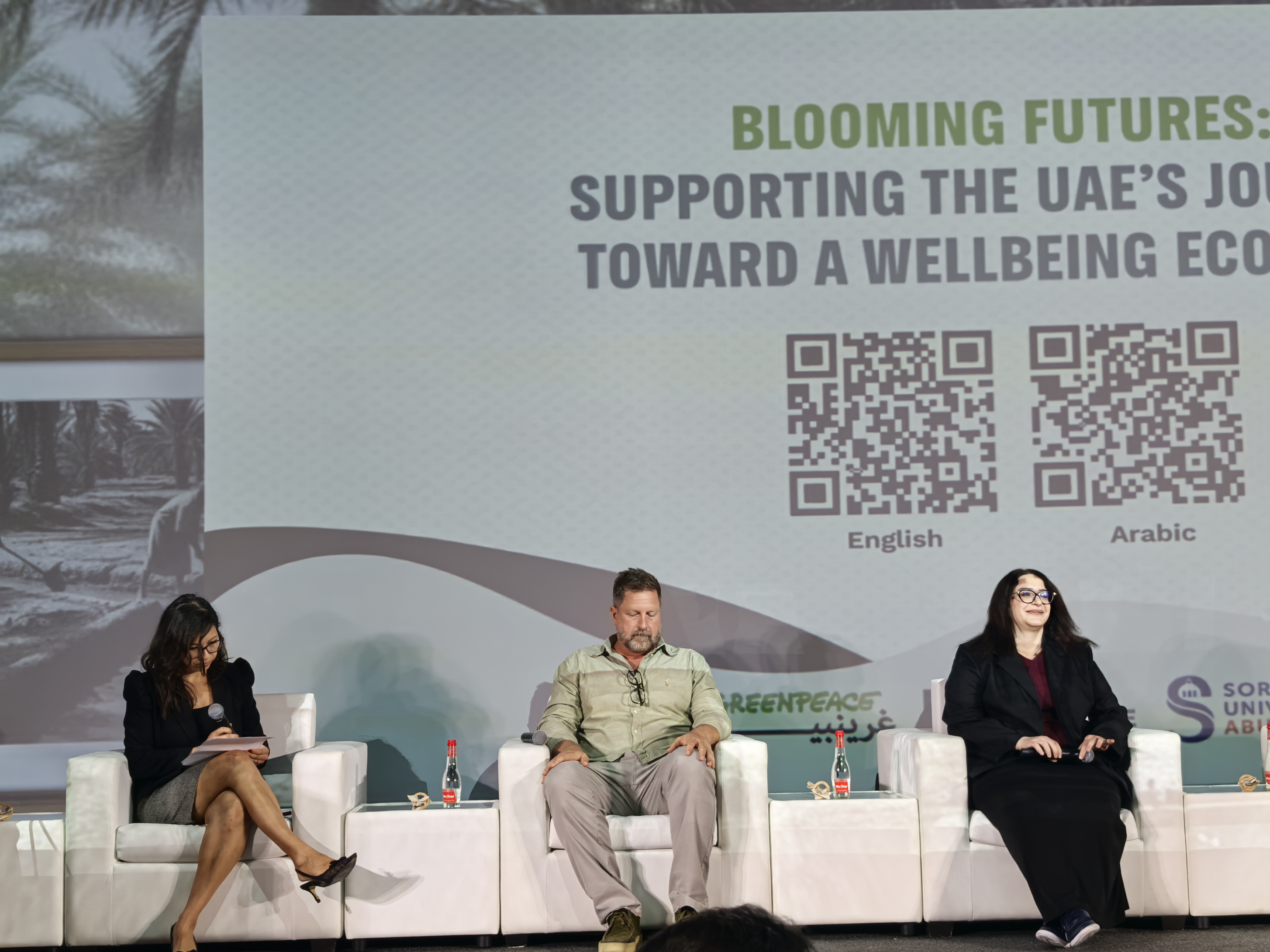
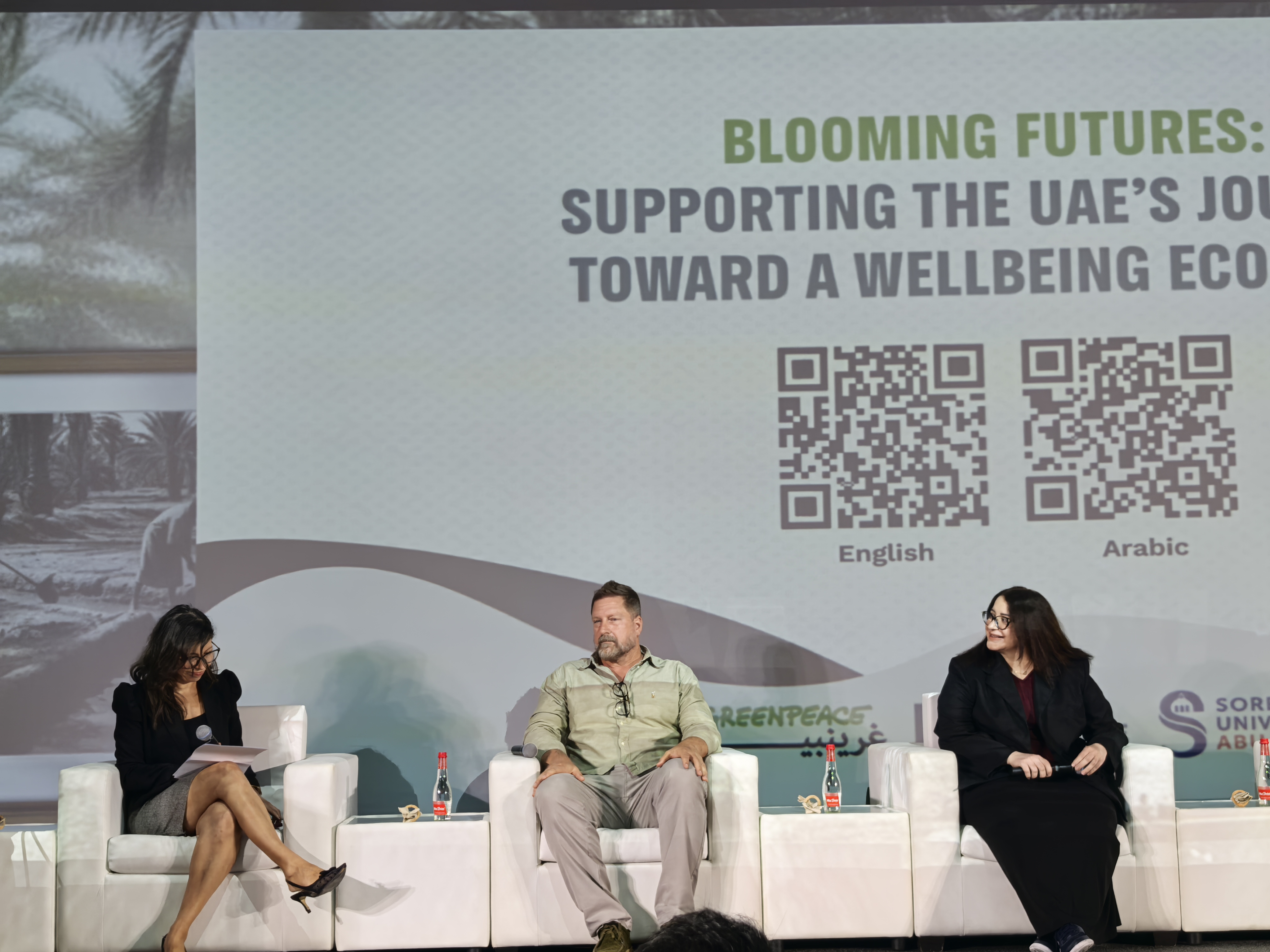
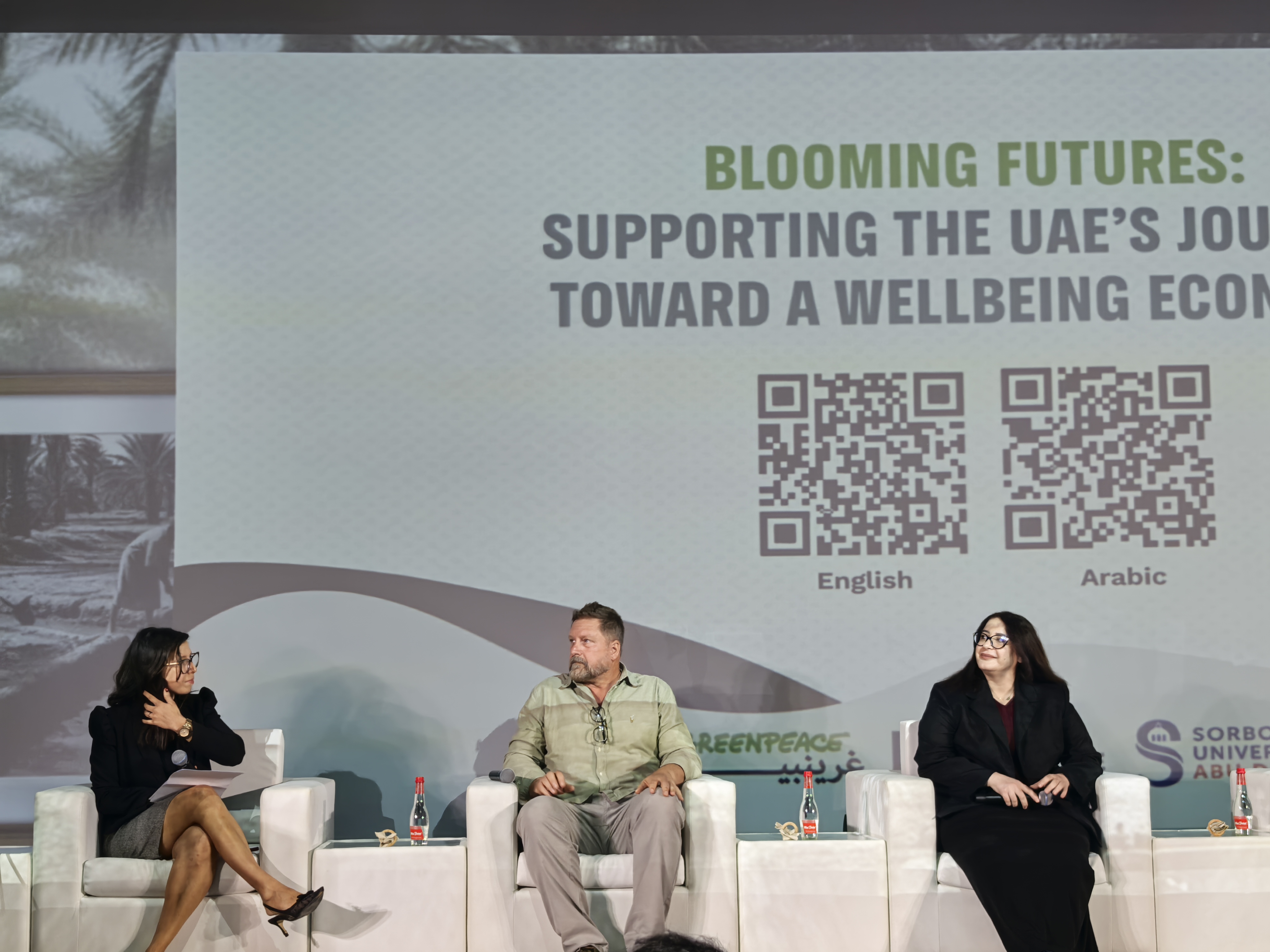
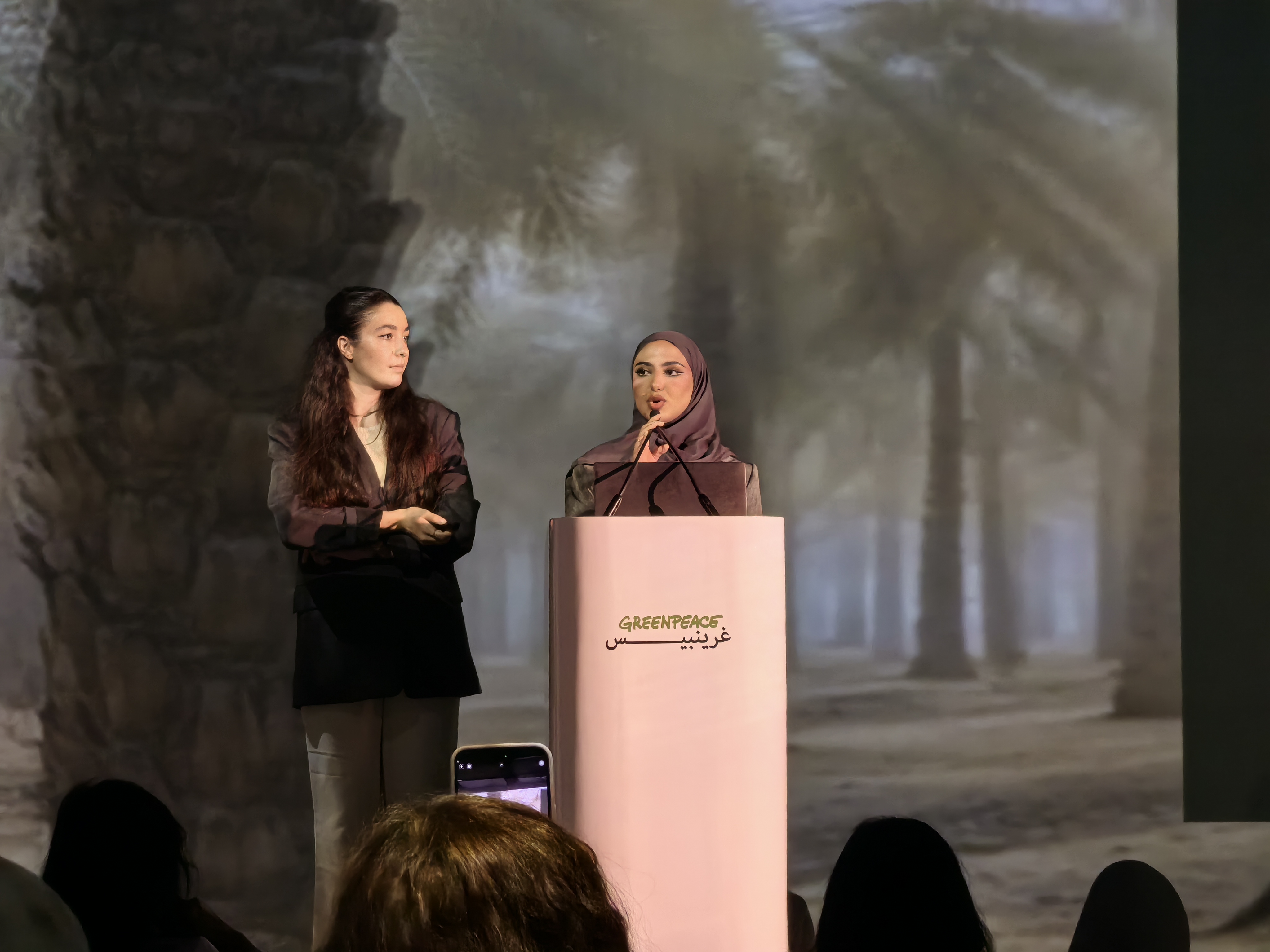
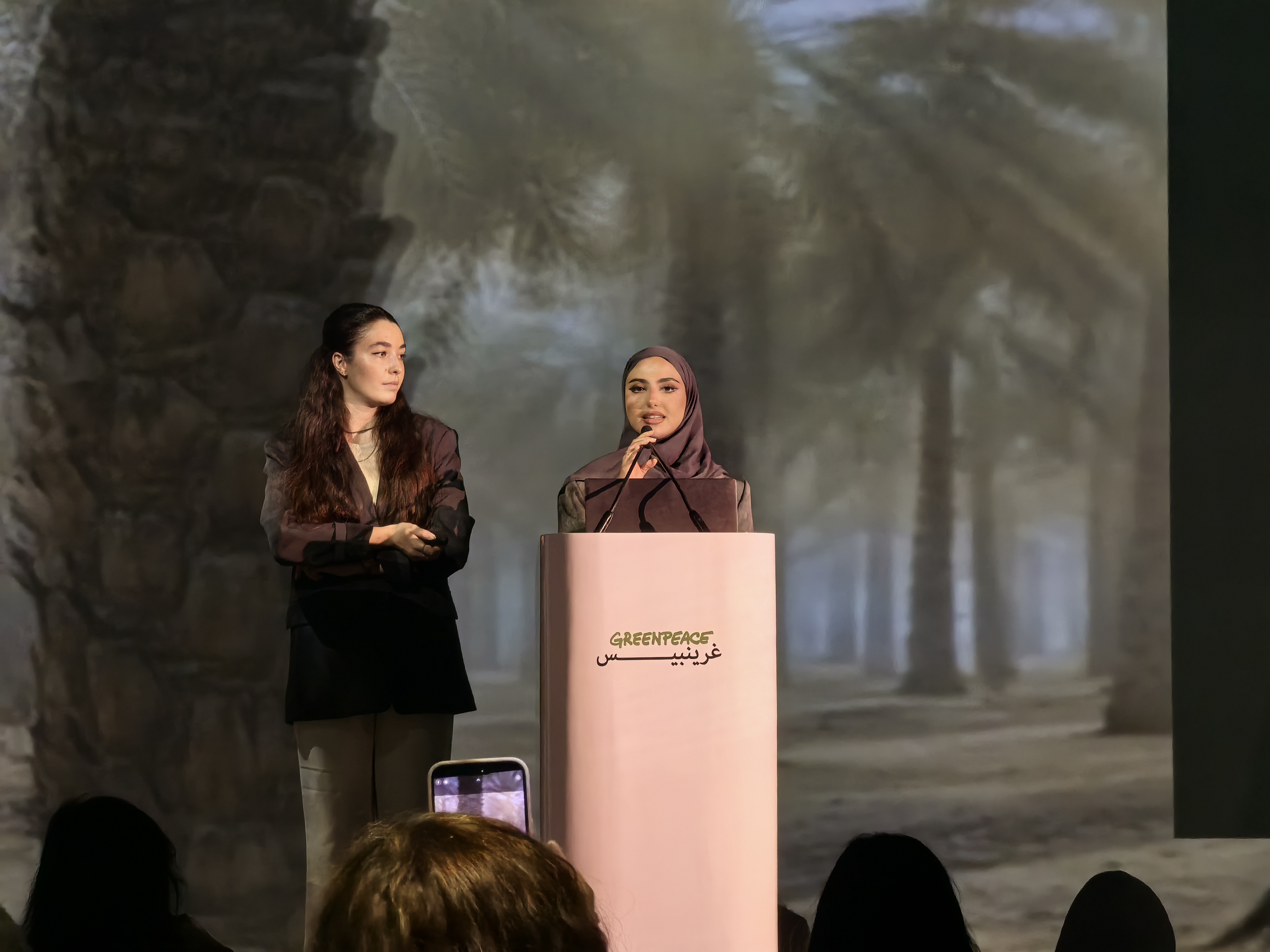
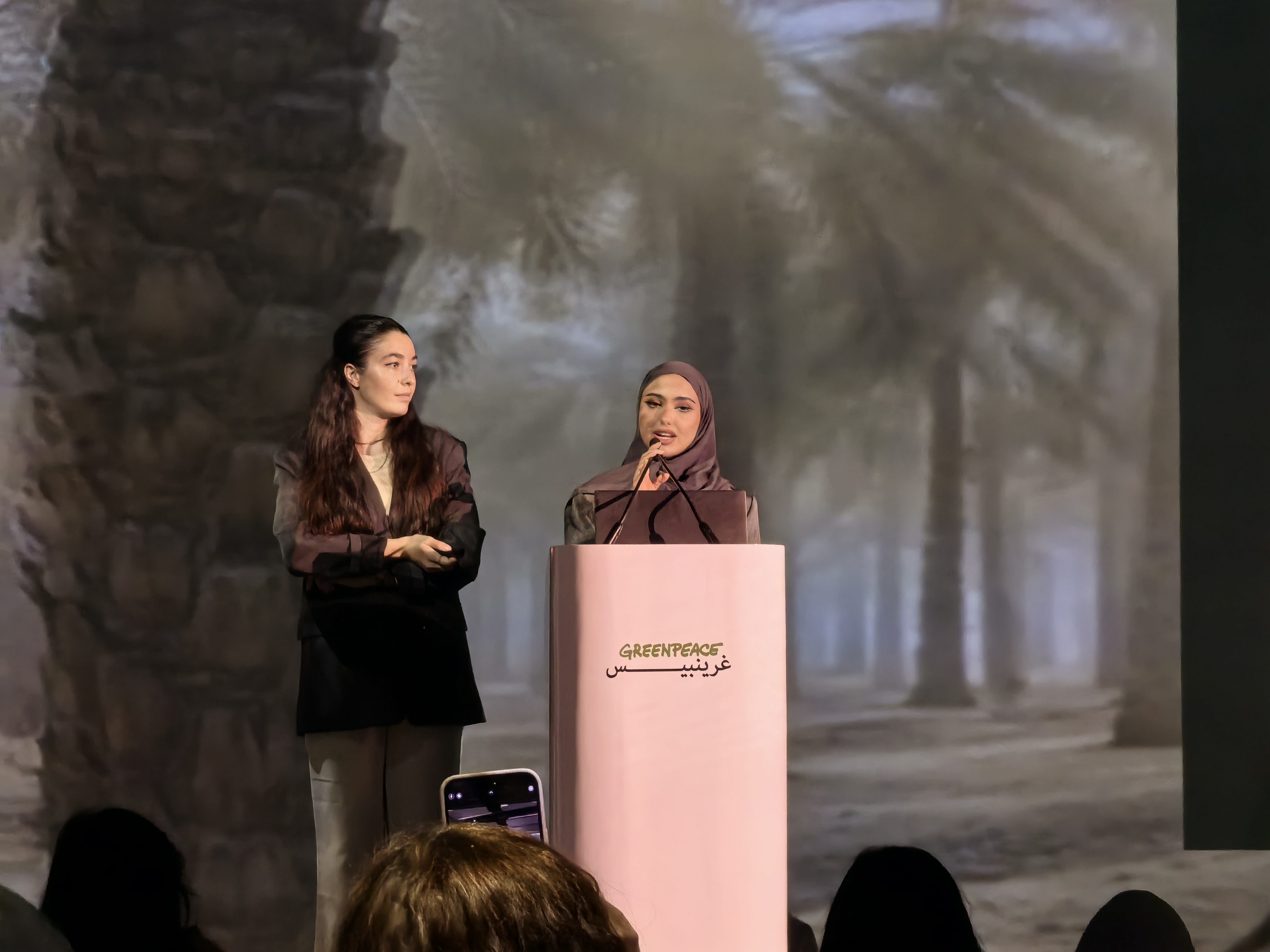
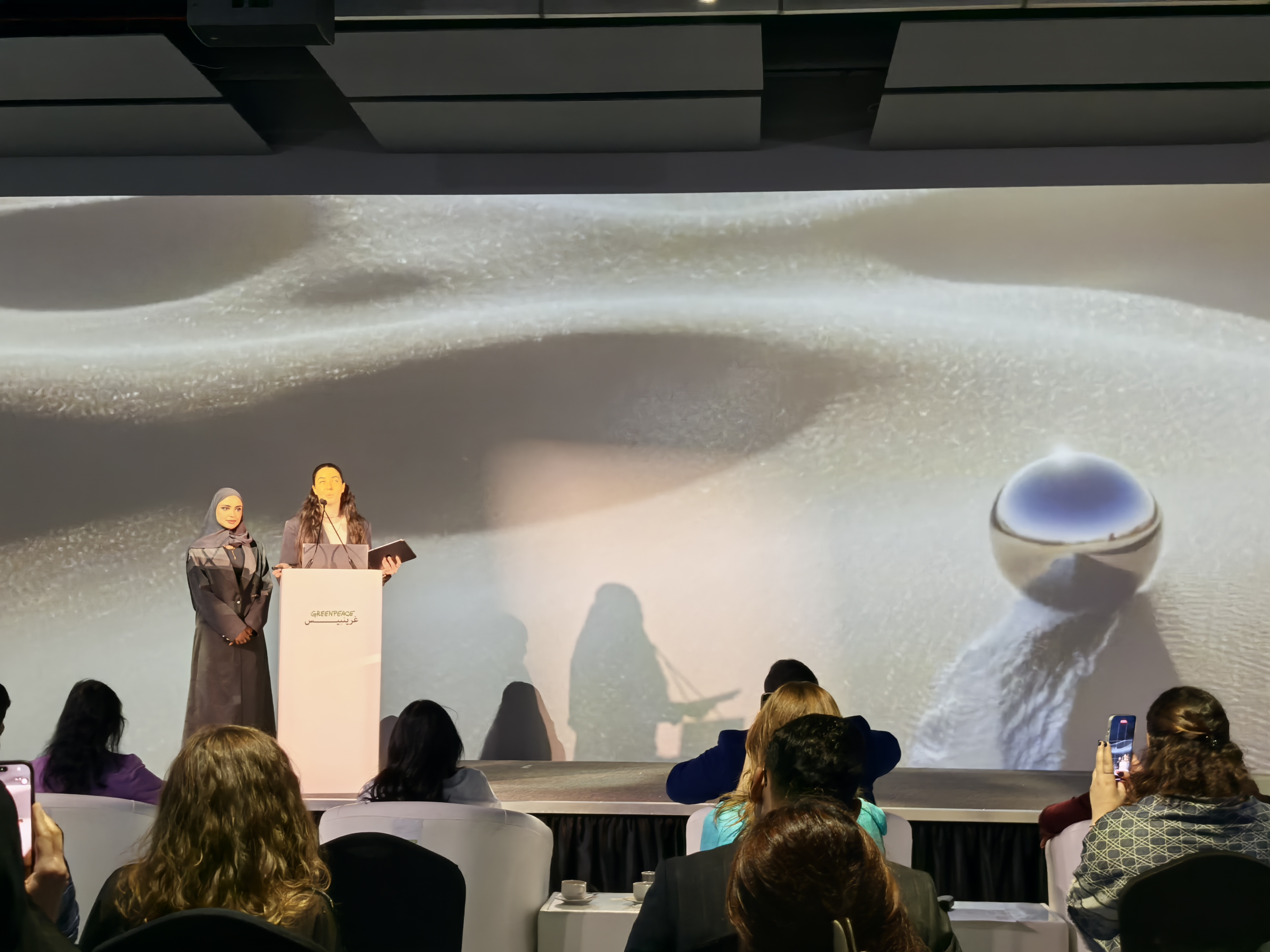
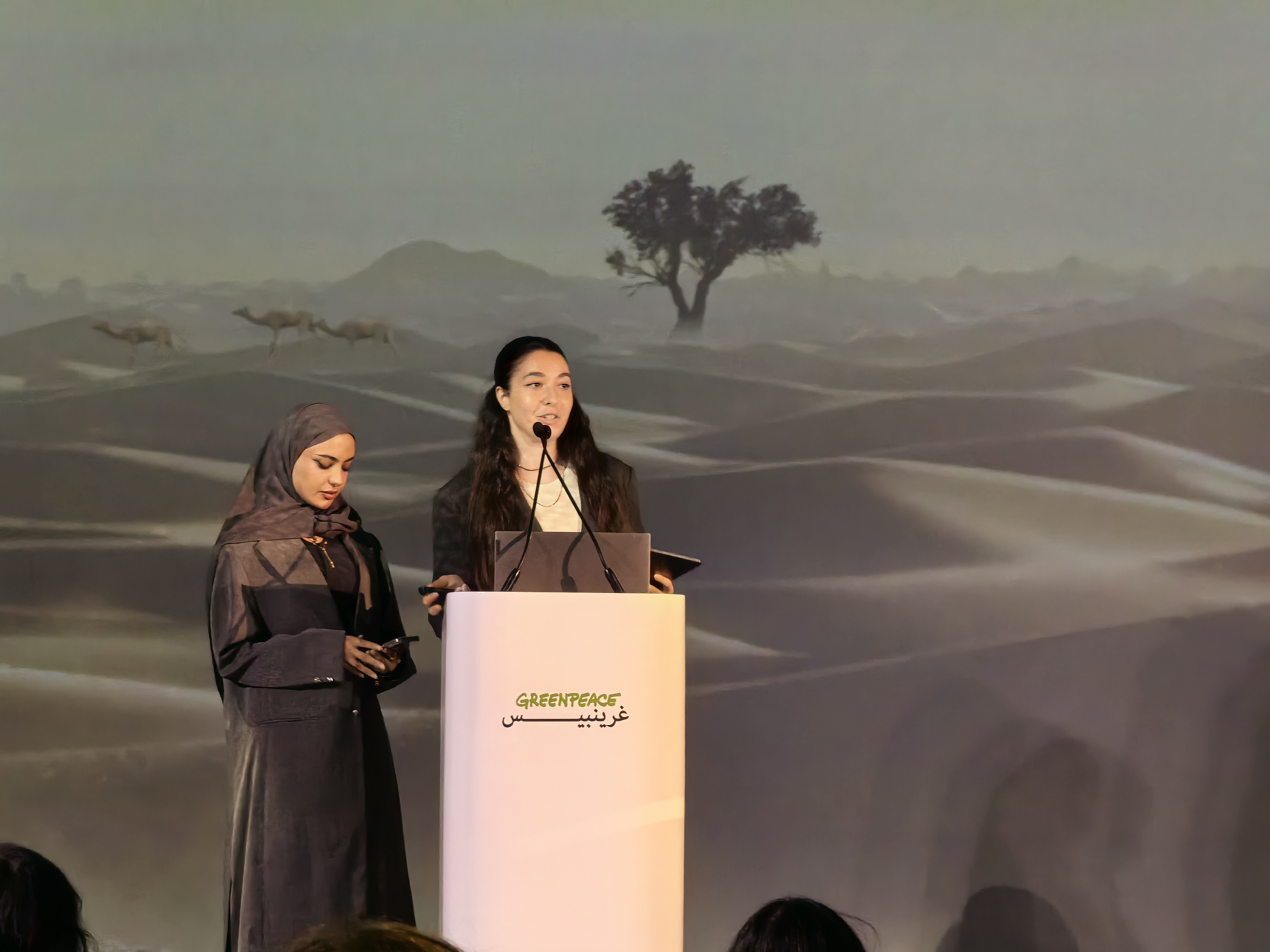
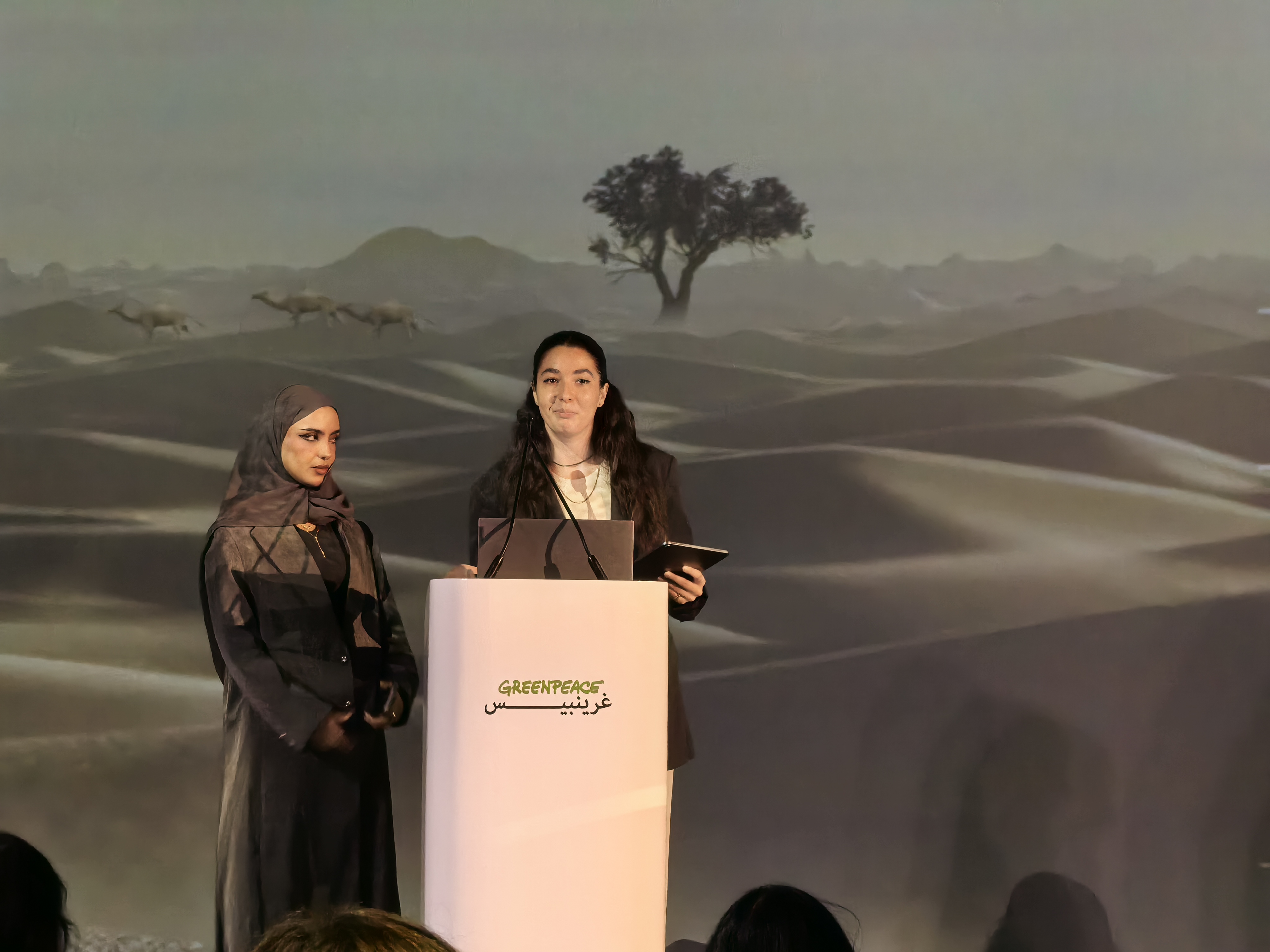
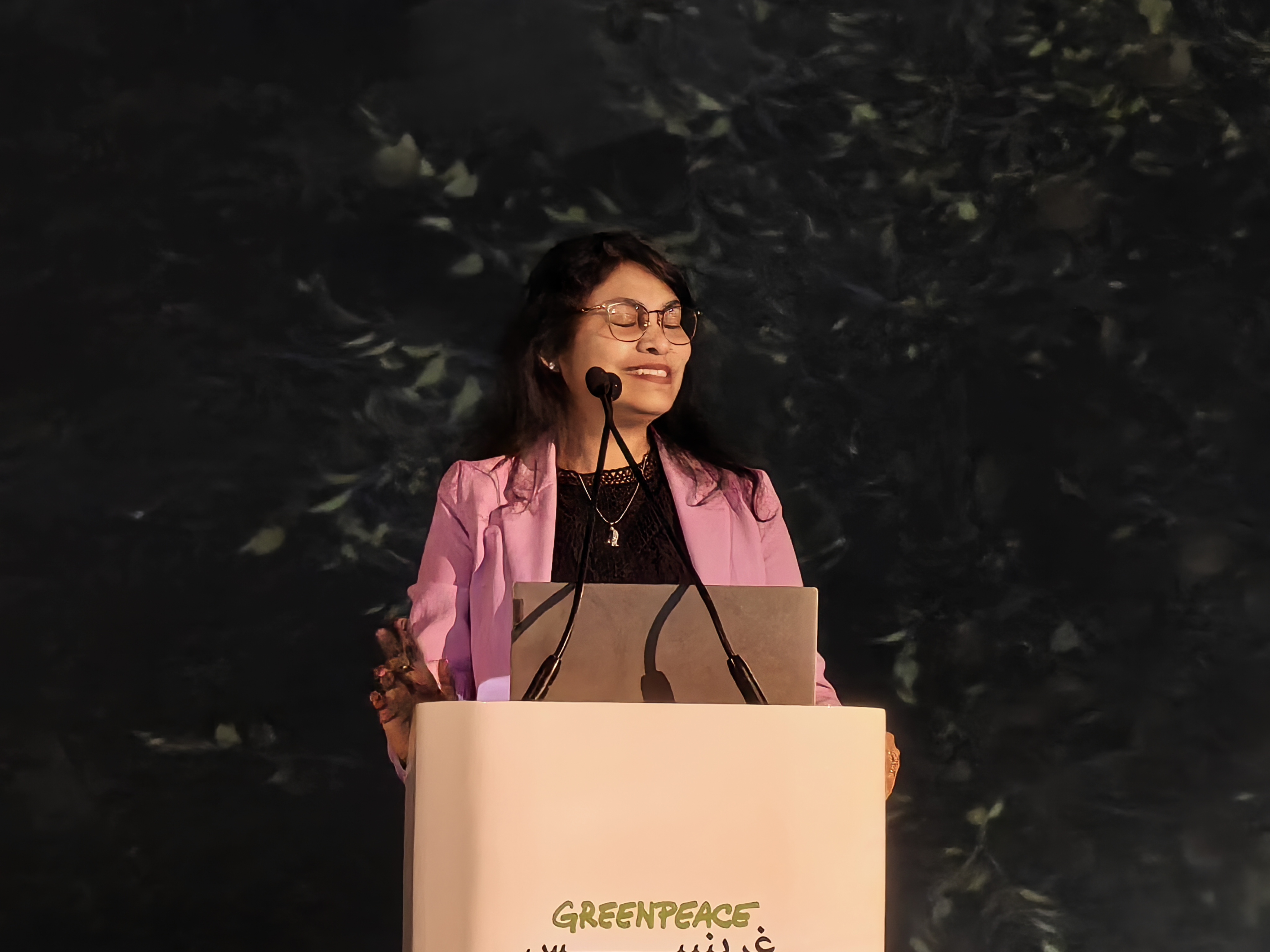
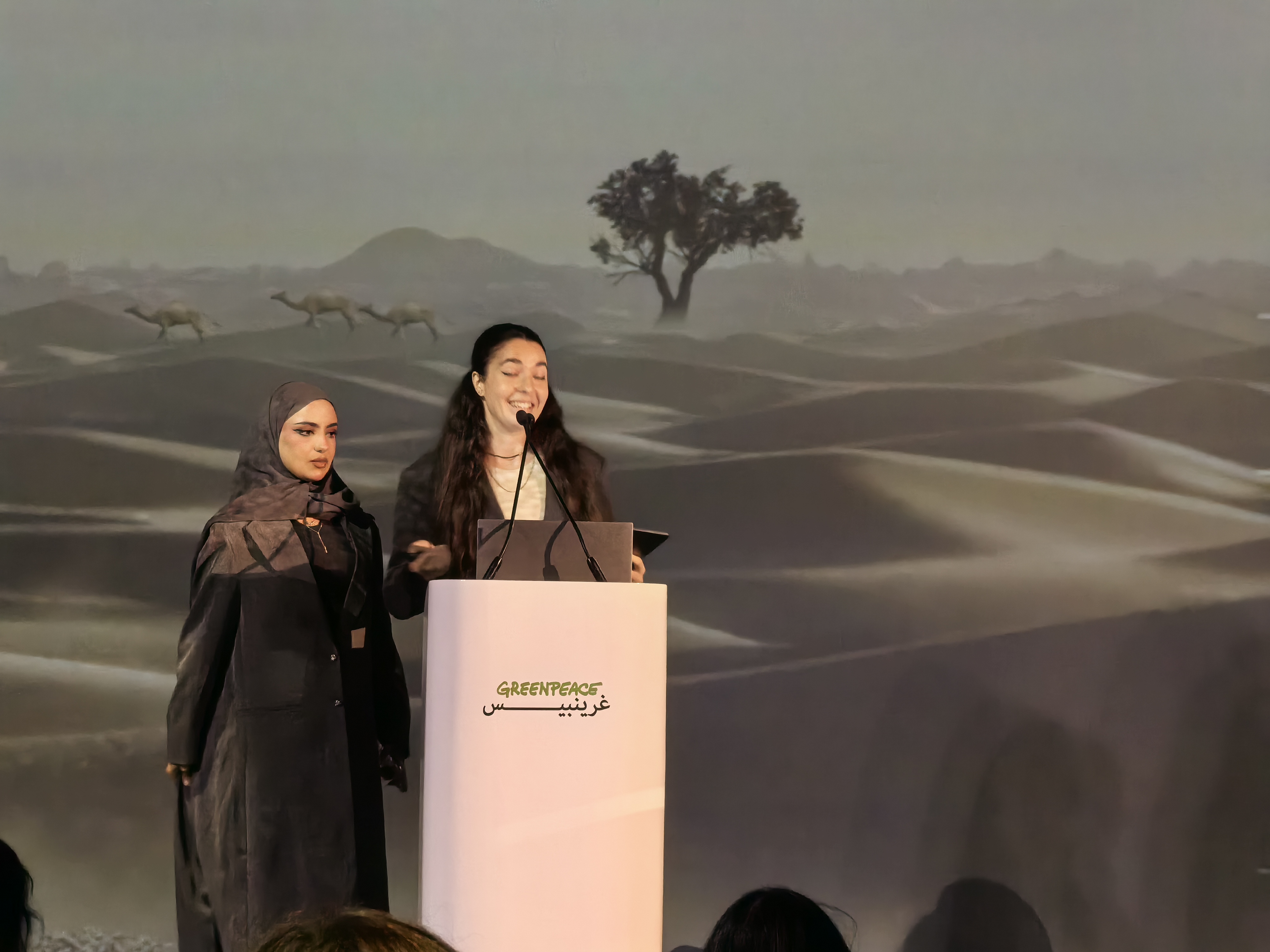
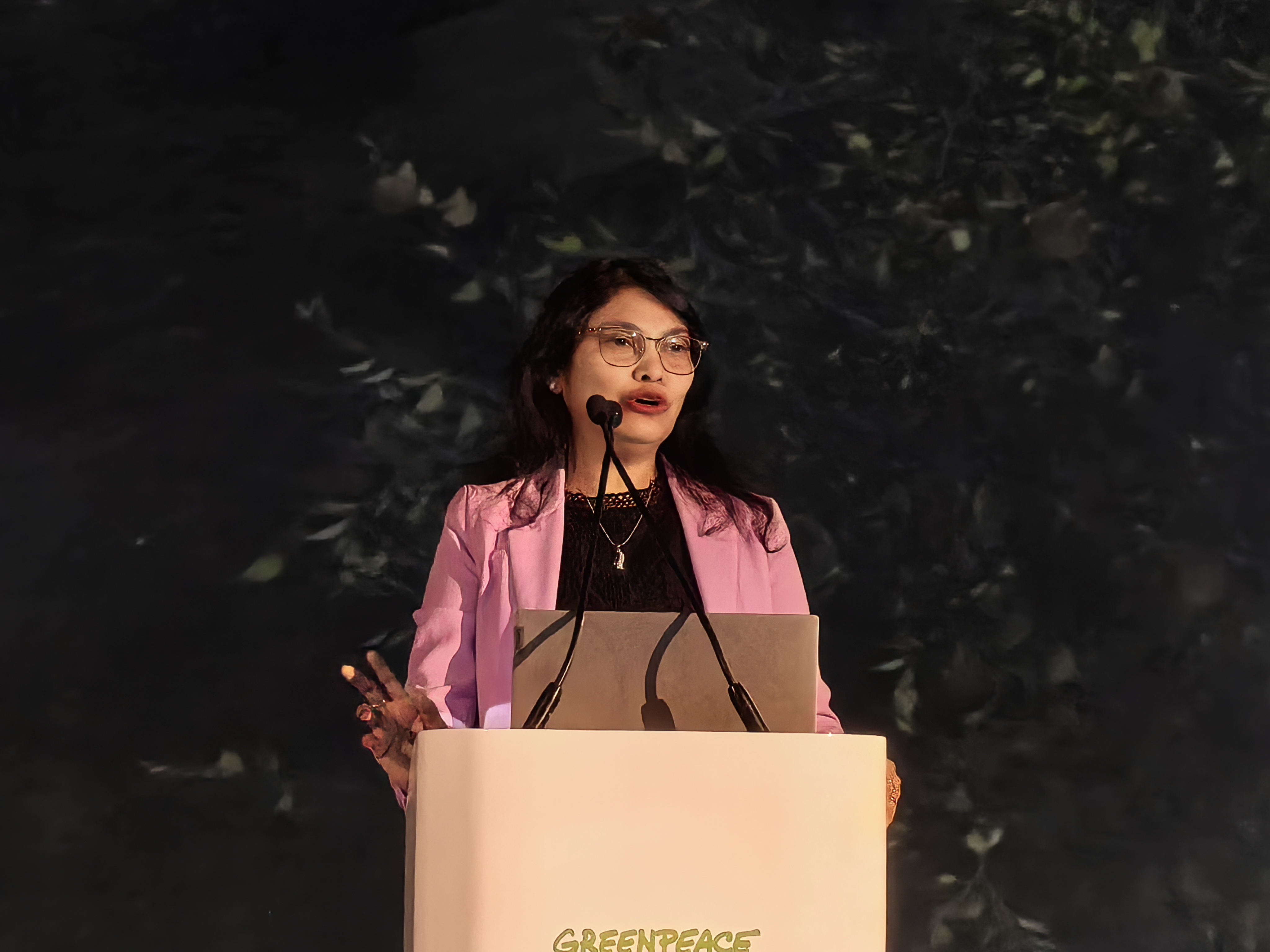
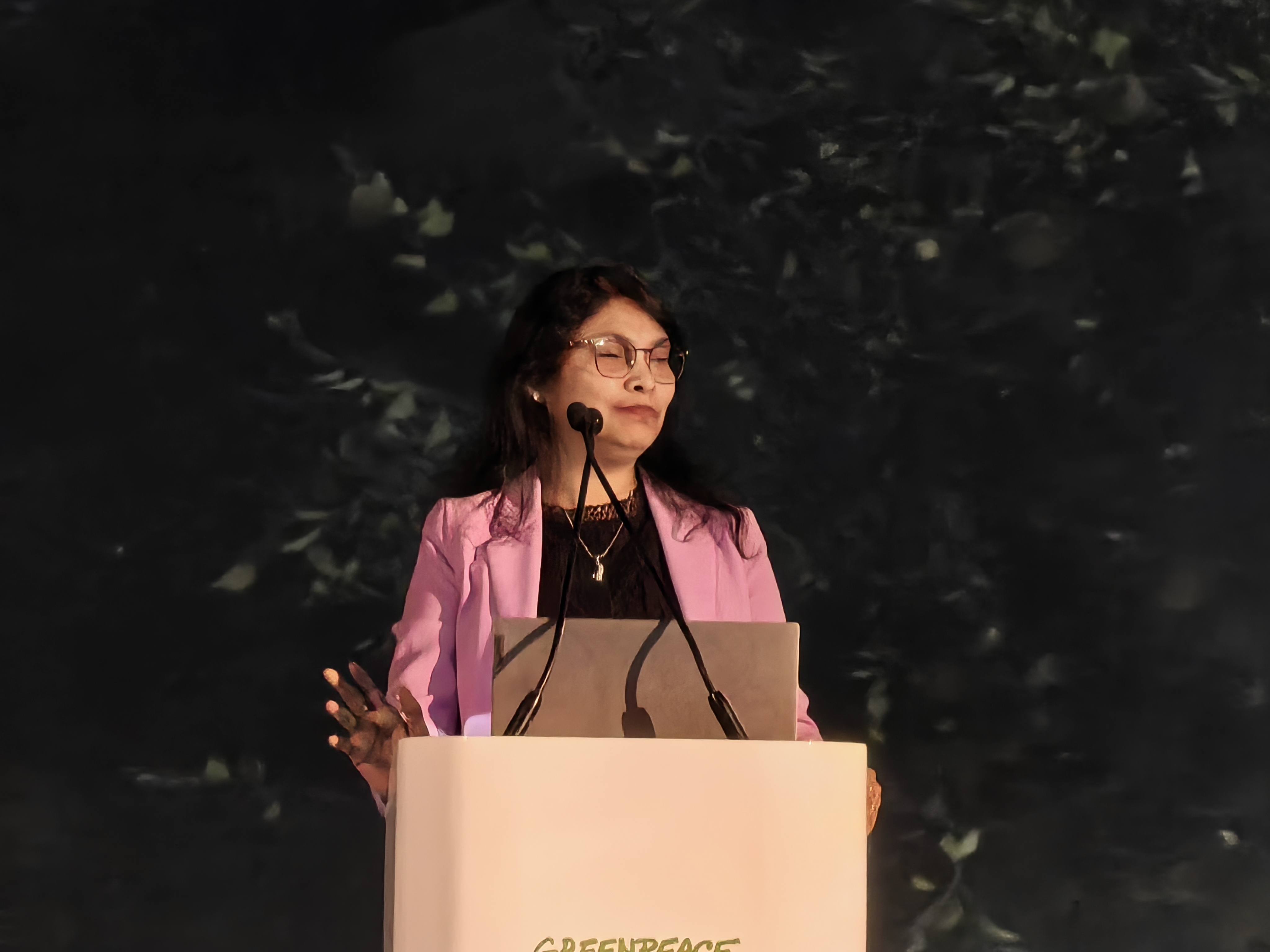
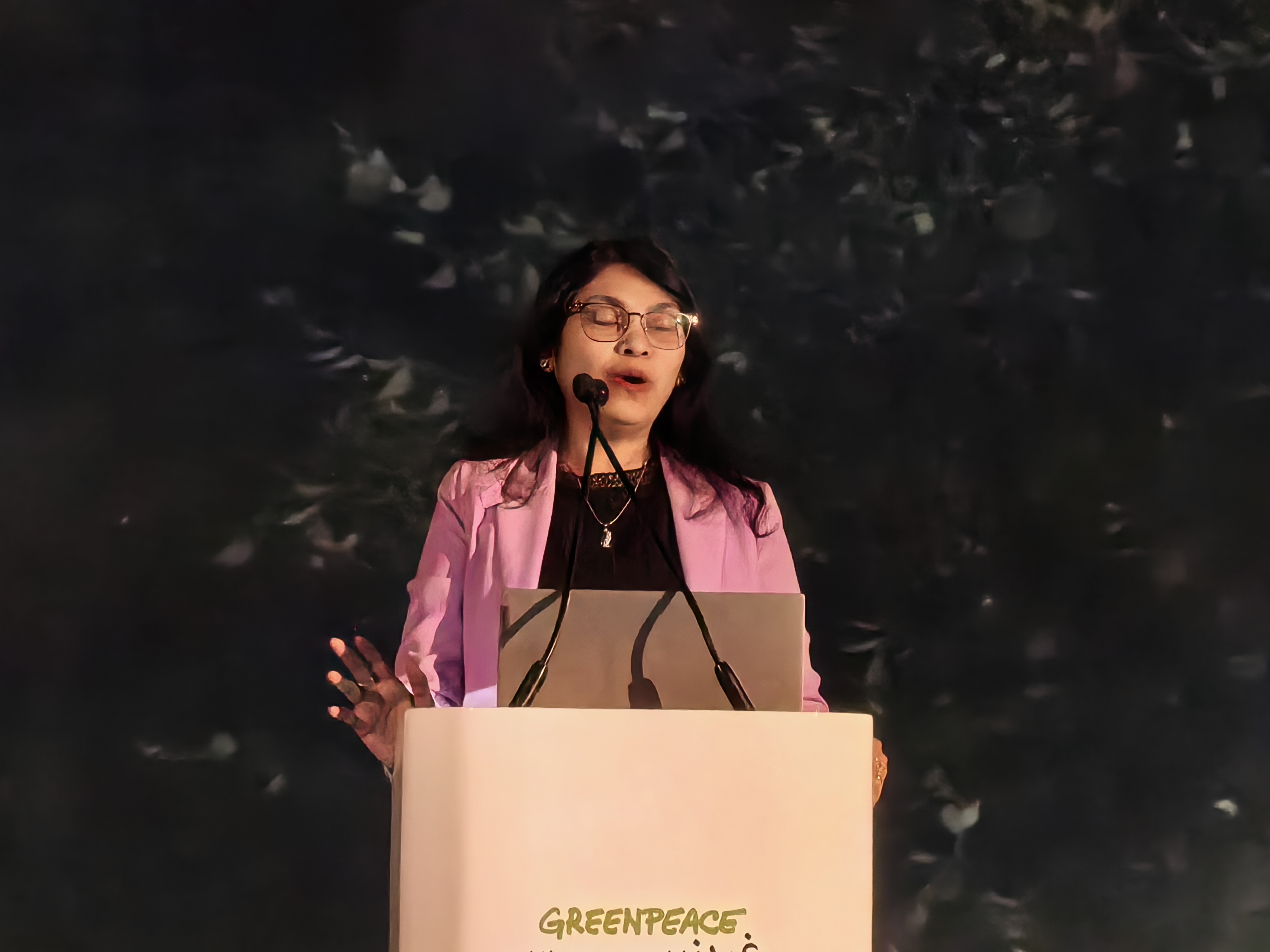
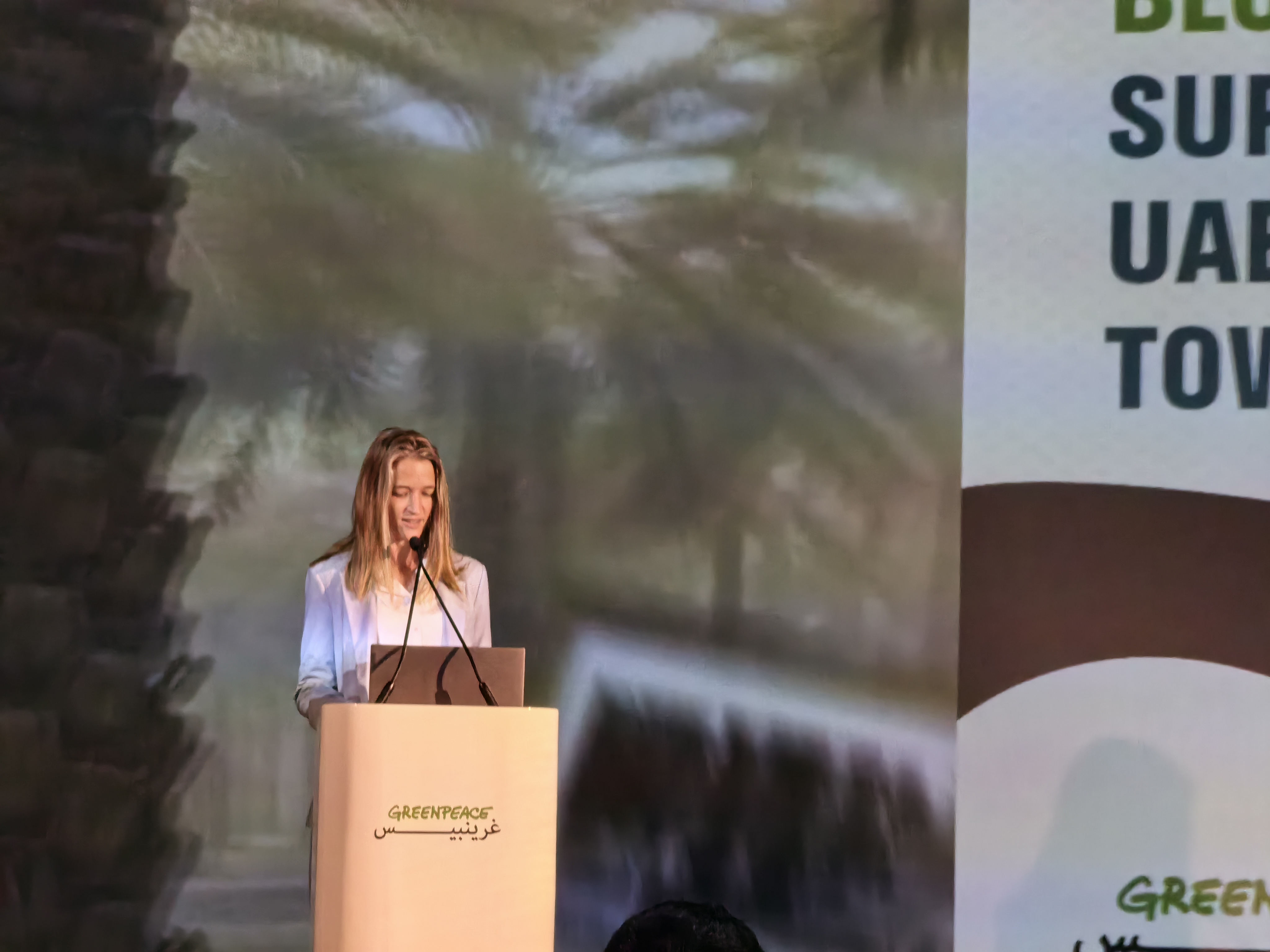
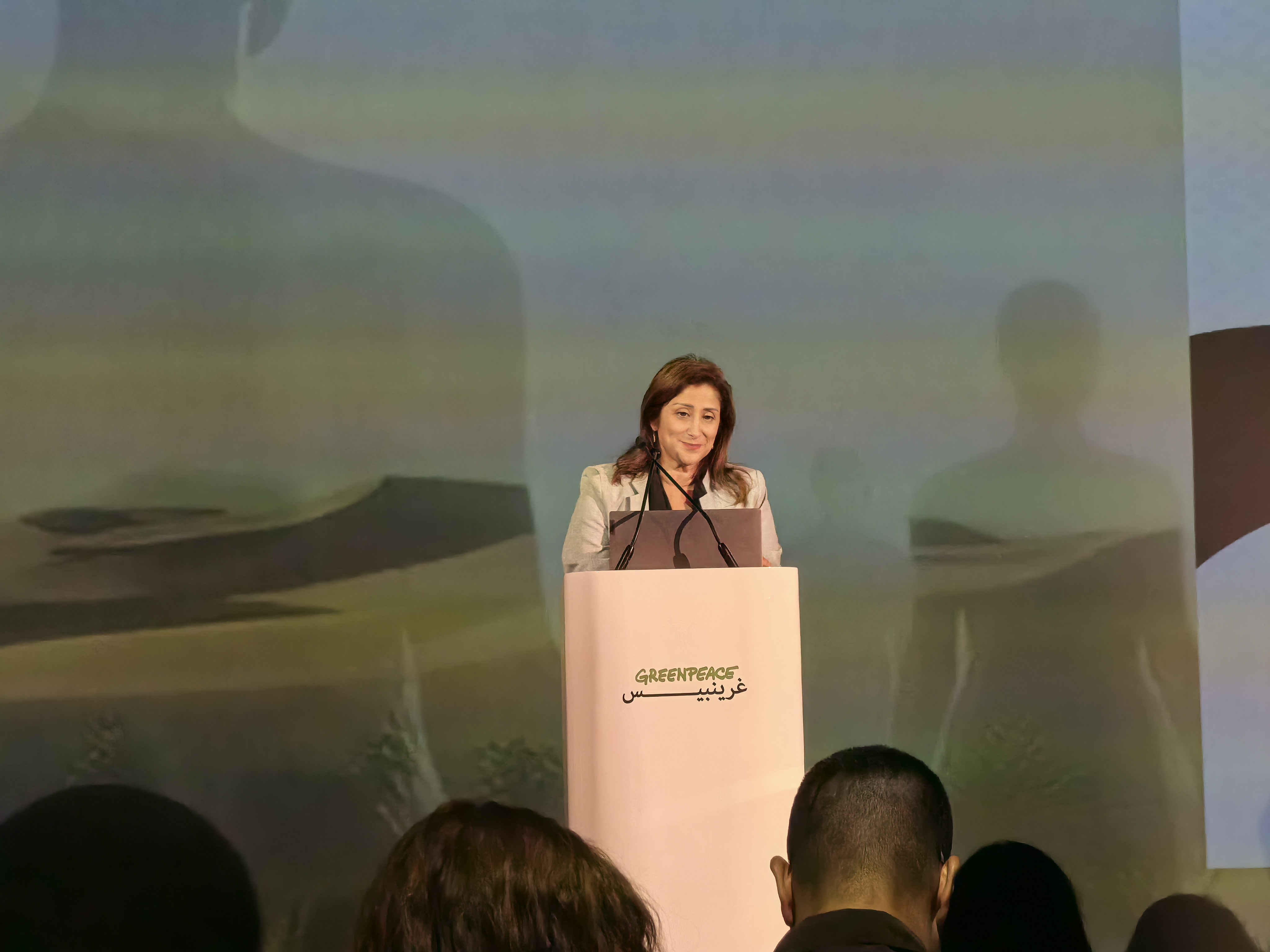
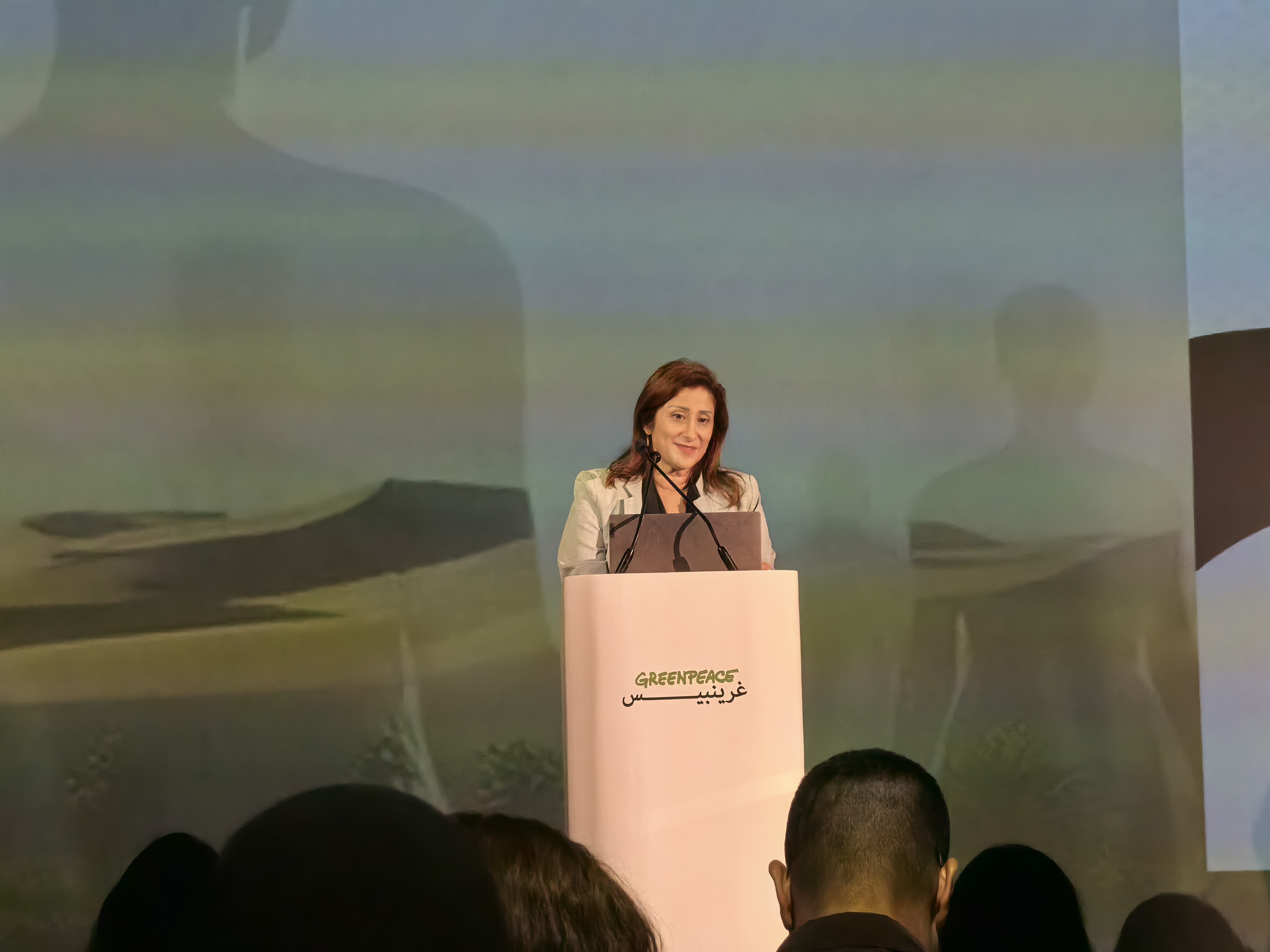
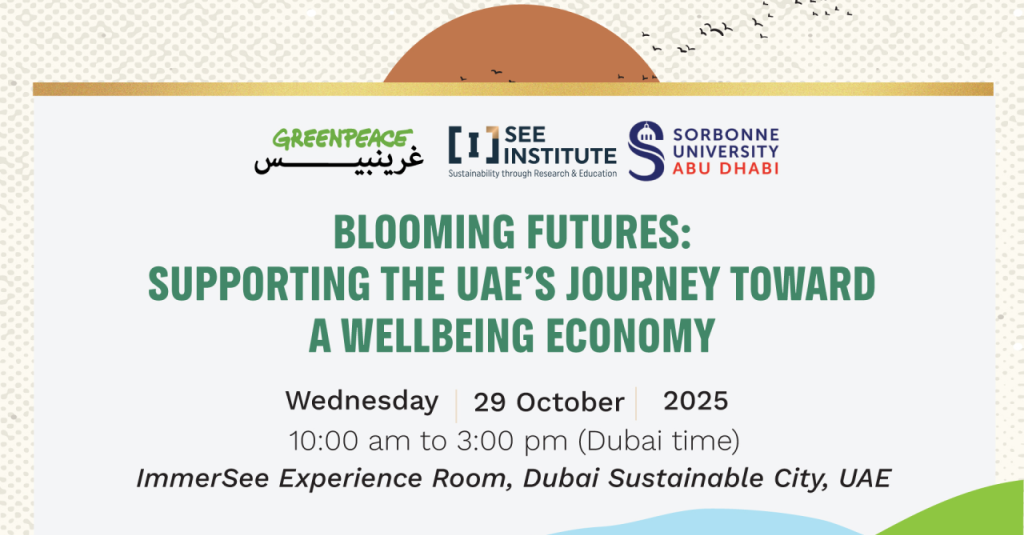
Maya Haddad, Senior Sustainability Manager at Ajman University, participated as a distinguished panelist at the launch of the “Blooming Futures: Supporting the UAE’s Journey Toward a Wellbeing Economy” report. The event, held at Dubai Sustainable City on 29 October 2025, was a collaborative effort between Greenpeace MENA, Sorbonne University Abu Dhabi, and SEE Institute.
The report explores biomimicry and commons practices in the UAE as pathways toward a Wellbeing Economy. Designed for industry leaders and policymakers, it draws on on-the-ground initiatives and curated stakeholder insights to offer a strategic roadmap for positioning the UAE as a global leader in climate action and wellbeing-centered development.
Haddad joined a panel of visionary experts for a discussion titled “Innovation for Regeneration: How Can Innovation and Regeneration Complete Rather Than Compete?” The session was moderated by Dr. Hanen Keskes, Campaigns Lead at Greenpeace MENA. Fellow panelists included Najla Almatrooshi and Nicole Weber, authors of the report from Sorbonne University Abu Dhabi; Phil Dunn, Senior Manager at Terra – The Sustainability Pavilion, Expo City Dubai; and Dr. Ramzi Laamouri, Secretary General of the Social and Cooperative Economy Network, MENA.
During the discussion, Haddad brought a crucial perspective on youth engagement, education, and the "commons" mindset. Addressing the intersection of social resilience and innovation, she explored how the principles of shared stewardship, reciprocity, and care can be applied to managing resources and knowledge.
Speaking on how young innovators approach sustainability today, Haddad highlighted a growing shift toward collaboration over competition. She emphasized that students are increasingly rooting their creativity in local realities and reimagining existing resources, rather than simply relying on imported technologies. Furthermore, she outlined how universities can create more space for this kind of thinking, fostering environments where innovation is deeply connected to community and ecological balance.
The panel also featured deep dives into how biomimicry can shape design, drawing from nature to enhance both human wellbeing and ecological balance, and how reviving collective traditions can build a regenerative economy without always depending on imported systems.
The launch event underscored the importance of systemic change and collective futures, bringing together academia, environmental advocacy, and industry to navigate the challenges of a changing world. Ajman University’s participation reflects its ongoing commitment to advancing the UN Sustainable Development Goals, empowering youth in climate action, and supporting the UAE’s transition toward a sustainable and prosperous future.