News
Ajman University Students Participate in the 25th Inter-College Environmental Public Speaking Competition
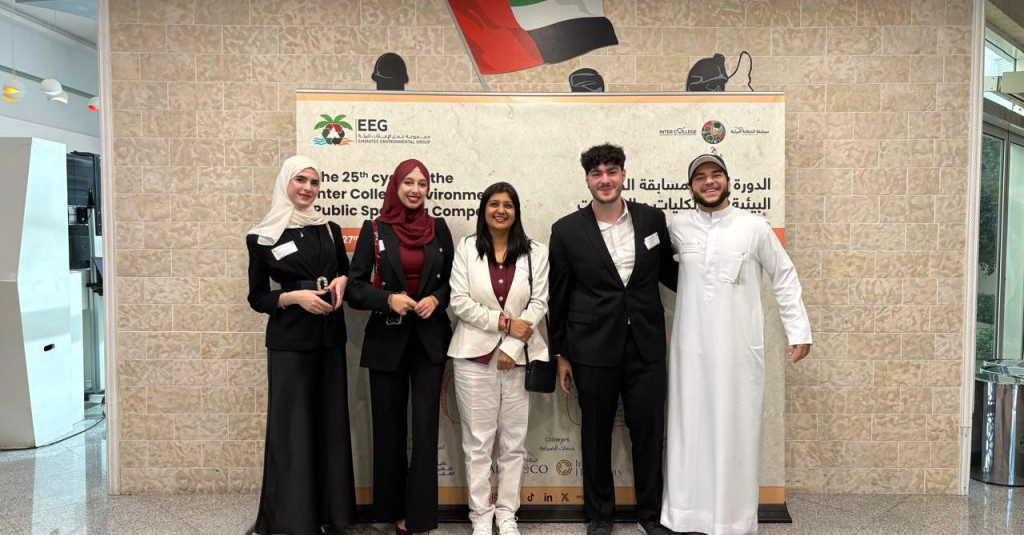
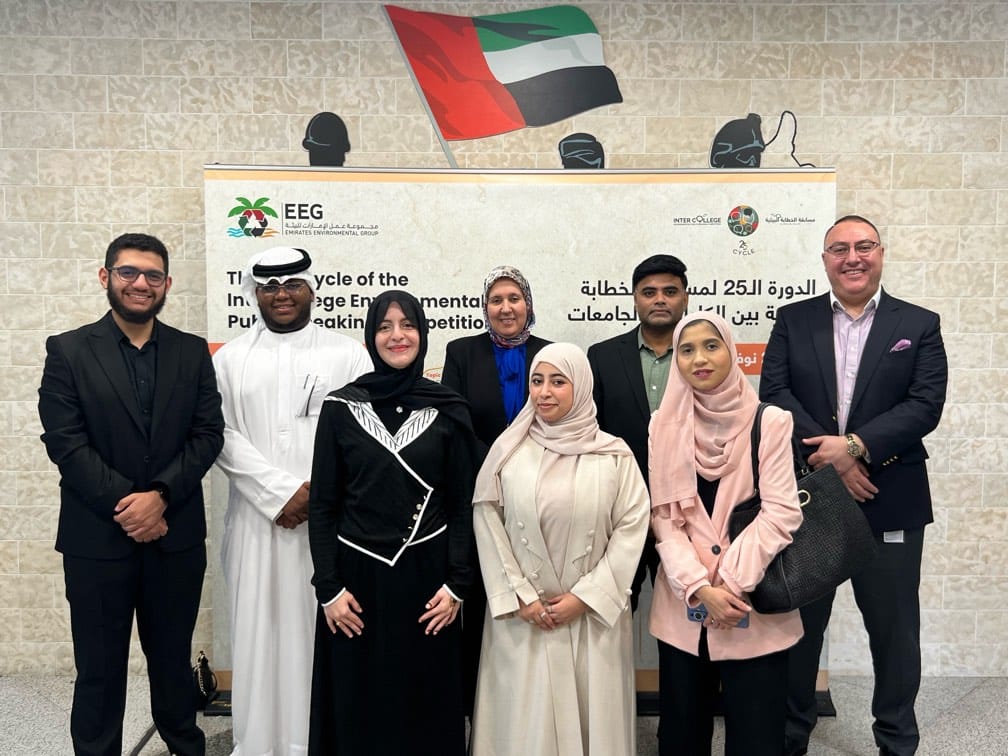
Ajman University students took part in the 25th edition of the Inter-College Environmental Public Speaking Competition, organized by the Emirates Environmental Group (EEG). This competition serves as a leading educational platform aimed at enhancing youth awareness of environmental sustainability issues, as well as developing their critical thinking, collaboration, and problem-solving skills to address environmental challenges.
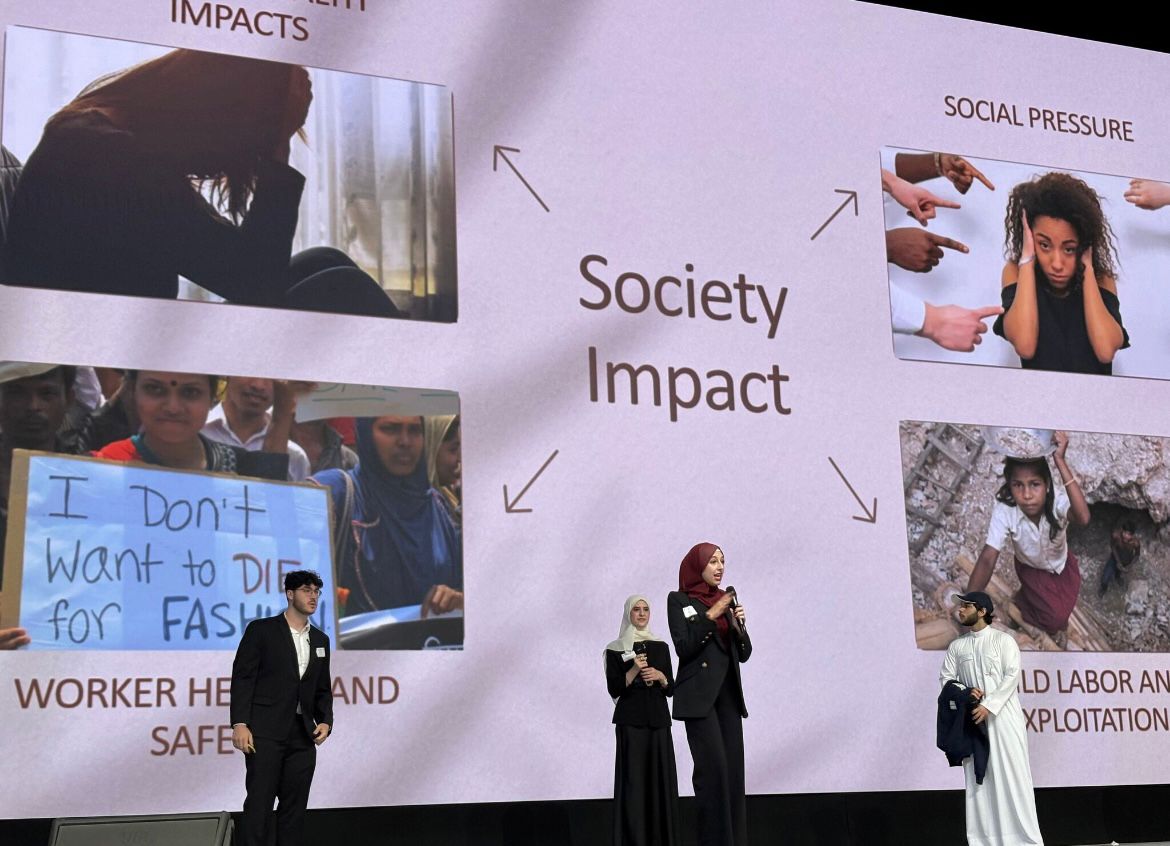
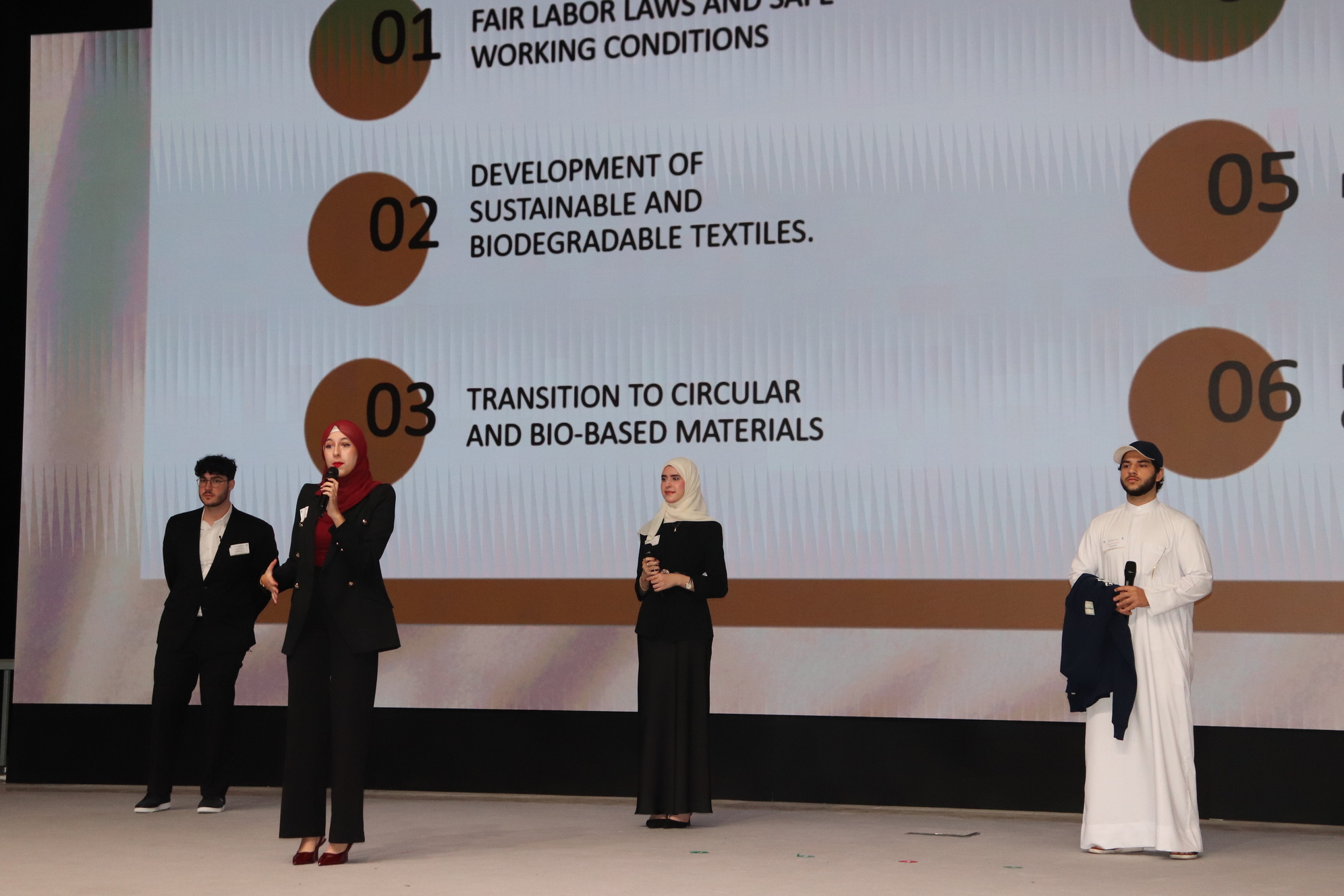
Three teams from the College of Dentistry, the College of Engineering and IT, and the College of Pharmacy represented Ajman University in the competition. A team from the College of Dentistry presented a project under the theme "Cosmetics and Clothes: The Environmental and Socio-Economic Footprint," examining the hidden environmental and human costs of the fashion and cosmetics industries, including deforestation linked to palm oil production, water pollution from textile dyeing and microplastics, and the projected rise in fashion-related emissions through 2030. Their presentation also addressed worker health and safety, child labour, animal testing, and the pressure created by unrealistic beauty standards, while proposing fair labour practices, sustainable and biodegradable textiles, circular materials, and greater consumer awareness.
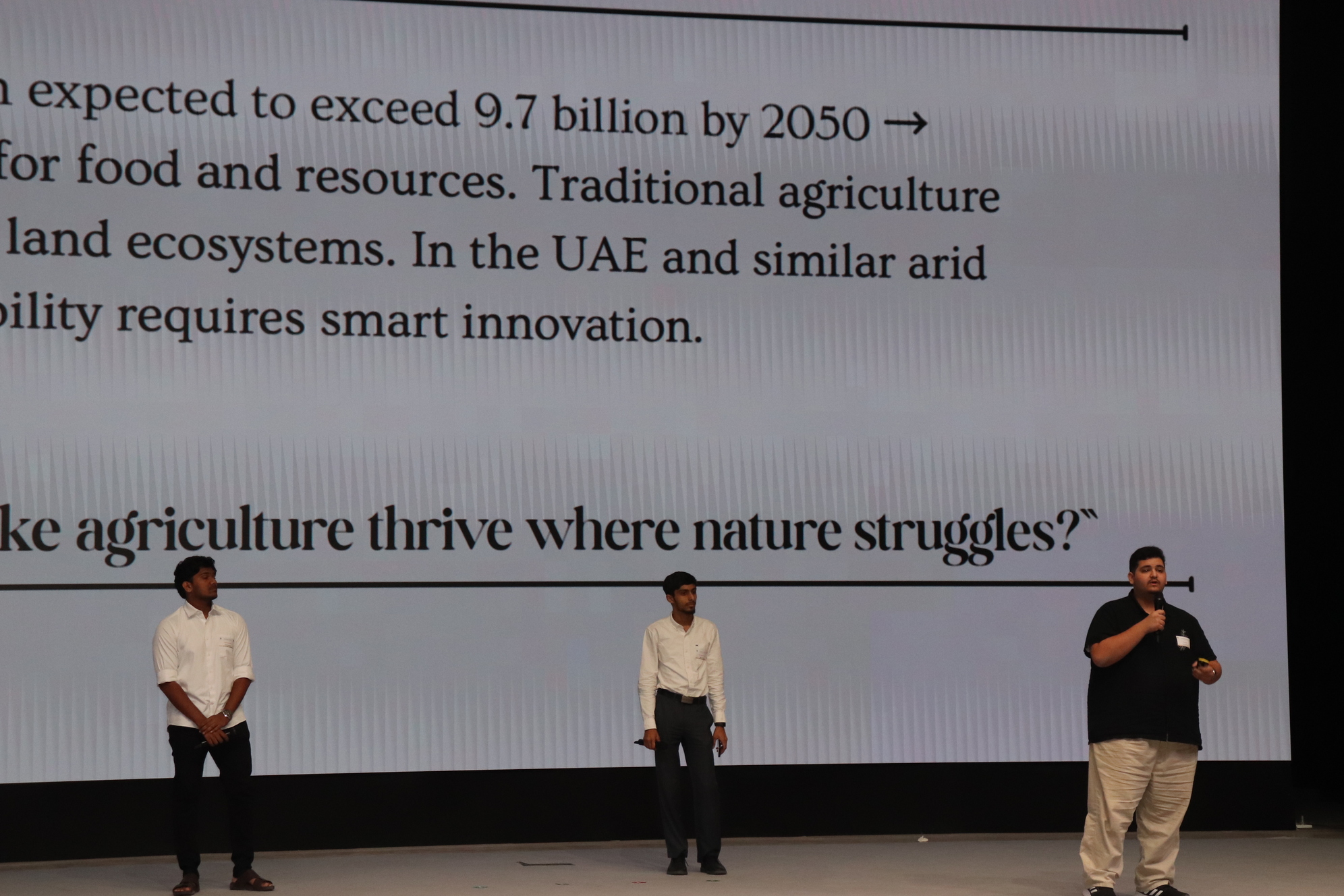
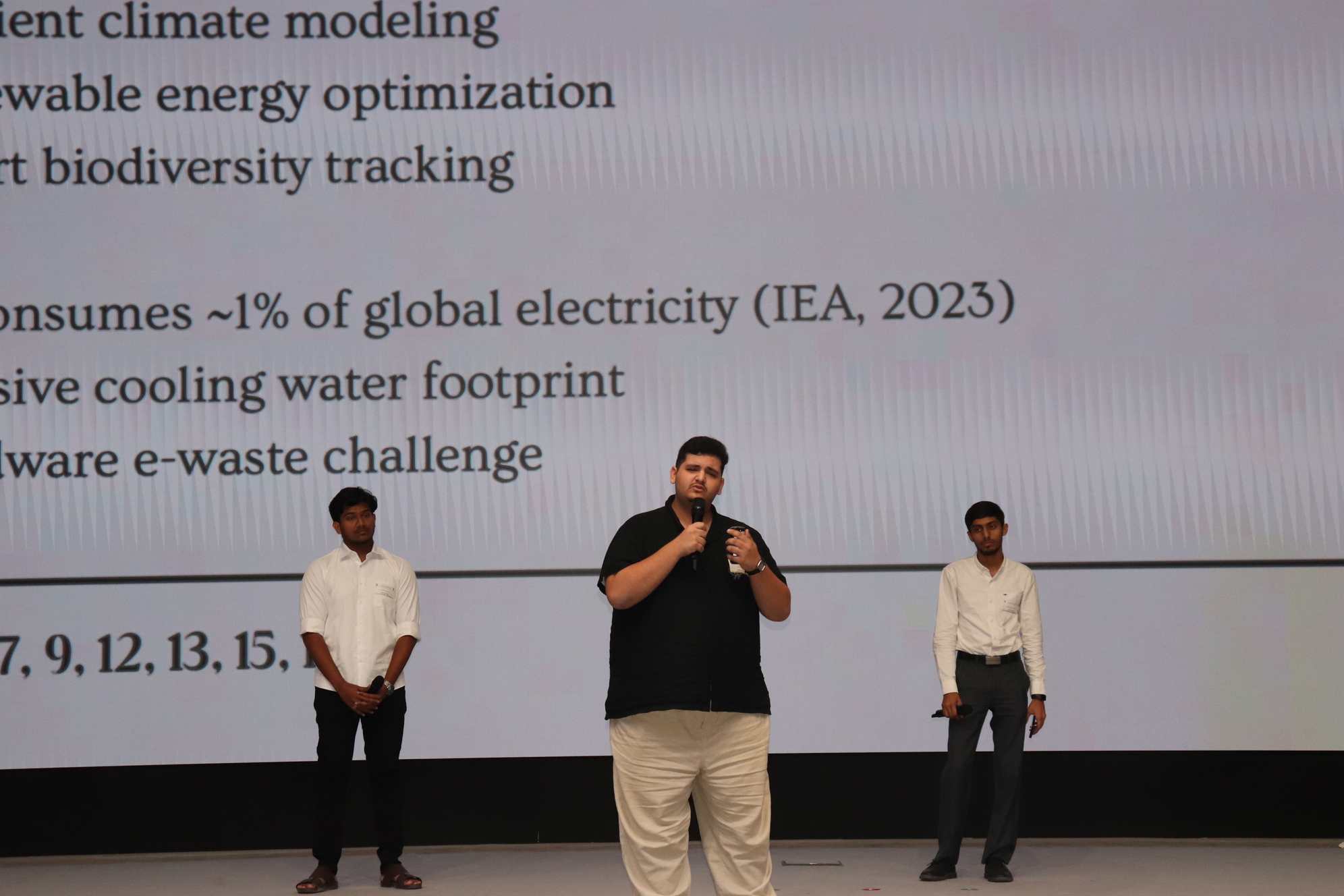
A team from the College of Engineering and IT presented an innovative and sustainable solution under the theme "Rethinking Green: How AI is Redefining Environmental Solutions," introducing OasisGreen, an AI-driven greenhouse model designed for extreme climates. The project combines AI forecasting, precision irrigation, and renewable energy to reduce water consumption by up to 30% and energy waste by 20%, while supporting food security and biodiversity protection in desert regions. The team also outlined a "Circular AI" framework covering green energy, model efficiency, hardware reuse, and lifecycle accountability, alongside a pilot concept for an AI-monitored smart agriculture hub with potential for wider adoption across the GCC. Their work acknowledged that while AI can support climate modelling, renewable energy optimisation, and biodiversity tracking, it also consumes around 1% of global electricity, making sustainable computing practices essential.
Additionally, a team from the College of Pharmacy participated by presenting a project under the theme "Urbanization vs. Wellbeing: The Role of Sustainable Cities in Public Health," which highlighted that more than half of the world's population now lives in urban areas, a figure expected to reach 70% by 2050, and that air pollution alone contributes to more than 6.7 million premature deaths each year. The team emphasised that sustainable urban development, green infrastructure, clean energy solutions, smart urban planning, and equitable access to healthcare and basic services are essential to improving quality of life for city residents.
The participating students highlighted that the competition offered a valuable opportunity to enhance their analytical skills, present ideas on a prestigious platform, and engage with environmental experts. They also appreciated the event's role in promoting environmental innovation and encouraging practical, sustainable solutions for a better future.
For the 2025 edition, EEG established key themes that address pressing environmental issues, including:
♻️ Interlinked Times: Climate Change and Biodiversity and How to Address Them
♻️ Rethinking Sustainability: How Does AI Impact Environmental Solutions?
♻️ Urbanization vs. Wellbeing: The Role of Sustainable Cities in Public Health
♻️ Two Crises, One Solution: Fighting Climate Change to Save Biodiversity
The themes reflect a broader understanding that climate change and biodiversity loss are deeply interconnected crises, with the Intergovernmental Science-Policy Platform on Biodiversity and Ecosystem Services (IPBES) estimating that around one million species are threatened with extinction due to human activity. Forests, wetlands, and oceans currently absorb approximately 56% of greenhouse gas emissions annually a vital function that is now under threat while the World Economic Forum estimates that nature-based solutions could deliver up to 37% of the emission reductions needed to keep global temperature rise below two degrees Celsius by 2030.
Ajman University is dedicated to fostering an educational environment that nurtures innovation and sustainability. It actively involves students in competitive platforms where they can analyze environmental issues and propose research-driven, creative solutions. The University also emphasizes the importance of environmental responsibility, creating opportunities for collaboration with sustainability experts and institutions, and empowering students as future leaders in environmental protection and sustainable development.