News
Dr. Samer H. Zyoud Participates in 2025 ADIA Lab Seminar Series on Energy Transition and Emerging Clean Technologies
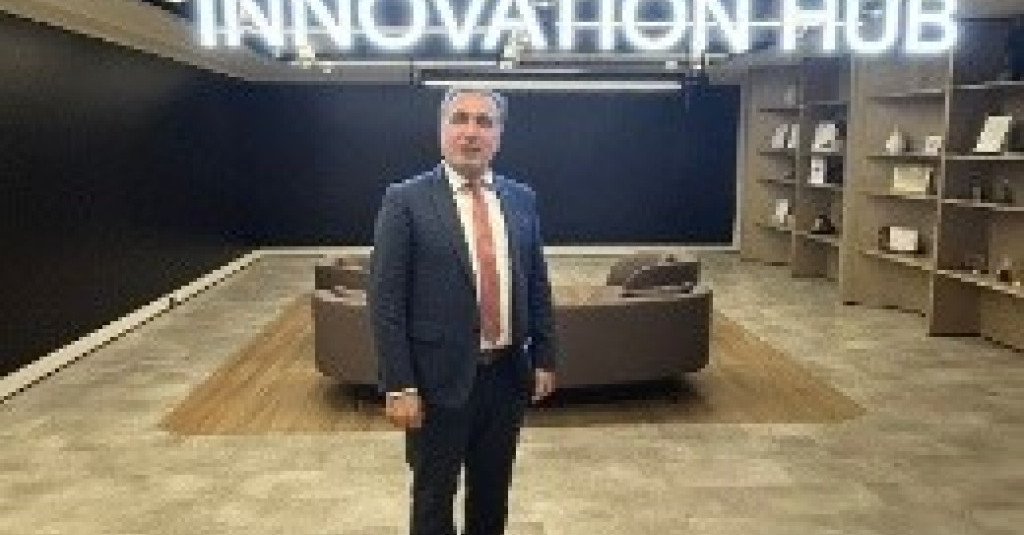
Ajman University representative engages with leading international researchers on predictive modeling, technology diffusion, and commercialization of clean-energy innovations
Dr. Samer H. Zyoud, Senior Lecturer in the Department of Mathematics and Science, College of Humanities and Sciences at Ajman University, attended the second session of the 2025 ADIA Lab Seminar Series, entitled “Energy Transition: Applying Universality and Predictability of Technology Diffusion to the Forecast.” The seminar was held at the ADGM Academy Research Centre, Abu Dhabi, UAE, and organized by ADIA Lab, Abu Dhabi Machine Learning, and the ADGM Academy Research Centre.
The seminar featured two distinguished international researchers: Prof. J. Doyne Farmer, Director of Complexity Economics at the Institute for New Economic Thinking, Oxford Martin School, University of Oxford, and Prof. Samuel Mao, Senior Director of Masdar Institute and Professor of Practice at Khalifa University. The session focused on advanced scientific approaches to accelerating the global energy transition, predicting technological developments, and addressing challenges associated with the commercialization and widespread adoption of emerging clean-energy technologies.
Key Topics and Scientific Insights
Predictive Modeling of Energy Technologies
Prof. Farmer presented innovative approaches to probabilistic technology-cost forecasting, explaining how historical technological development patterns and statistical models can help predict future cost reductions and deployment rates for renewable-energy systems. His presentation highlighted the application of technology diffusion models, particularly S-shaped adoption curves, to solar photovoltaics, wind energy, battery storage, and hydrogen-production technologies such as electrolyzers. These methods offer valuable insights into how technological improvements and decreasing costs may accelerate the transition from fossil fuels toward sustainable energy systems.
Commercialization and Market Adoption of Clean Technologies
Prof. Mao examined the technological, economic, and commercial barriers affecting the market adoption of emerging clean-energy solutions. Through relevant case studies, he discussed the importance of identifying technological competitive advantages, developing commercially viable innovations, understanding market conditions, and establishing appropriate strategies to facilitate the successful introduction of clean technologies into industrial applications. The presentation emphasized the critical relationship between scientific research, technology transfer, industrial collaboration, and sustainable economic development.
Relevance to Ajman University’s Research and Sustainability Priorities
Dr. Zyoud’s participation was particularly relevant to his research interests in advanced nanomaterials, renewable-energy technologies, semiconductor thin films, solar-cell optimization, environmental monitoring, and sustainable technological solutions. The seminar provided valuable perspectives on integrating predictive modeling, data-driven analysis, and technological innovation into applied research. These approaches are relevant to the evaluation of emerging renewable-energy materials, the economic feasibility of advanced environmental technologies, and pathways for transferring university research outcomes into practical applications.
The seminar’s emphasis on technology forecasting and commercialization also complemented Ajman University’s broader interests in sustainability, innovation, interdisciplinary research, and academia–industry engagement.
Professional Development and Potential Institutional Impact
Participation in this specialized international research seminar contributed to Dr. Zyoud’s continuing professional development by providing exposure to advanced methodologies and international research perspectives on energy decarbonization and technological diffusion. The knowledge gained offers opportunities to strengthen interdisciplinary research initiatives, integrate emerging sustainability concepts into teaching, identify potential research directions, and support future academic–industry collaborations.
Overall Significance
Dr. Zyoud’s attendance reflects his continued engagement with international scientific developments and professional activities relevant to renewable energy, sustainability, emerging technologies, and applied research. The session provided insights that can support his ongoing efforts to connect advanced scientific research with practical, environmentally sustainable, and economically viable technological applications. This participation aligns with Ajman University’s commitment to advancing research excellence, fostering innovation, and promoting sustainability-focused academic engagement.